
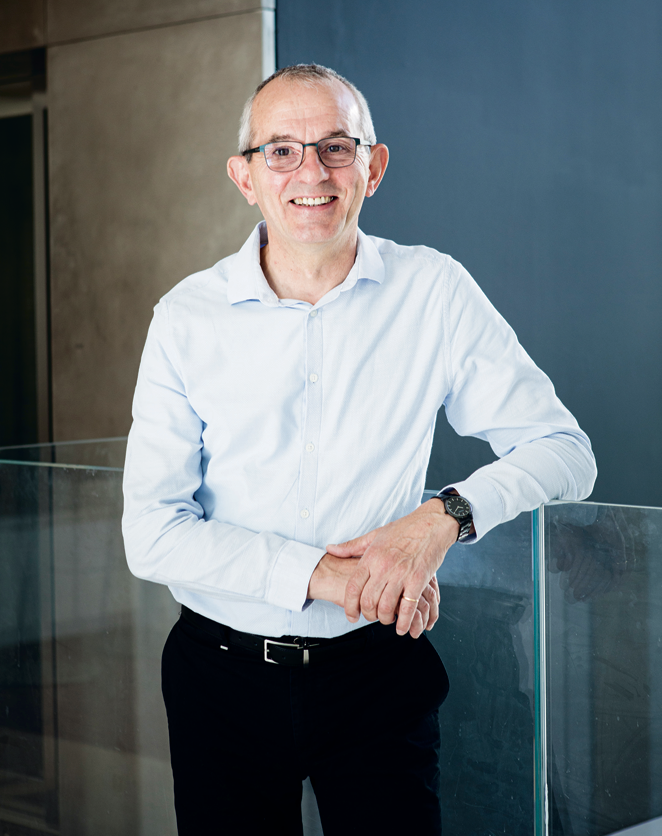
An interview with I.R. Dipl. Ing. Dr. Jacques GIERAK, Coordinator of the ‘Ion Sources & Instrumentation’ Platform at the Centre de Nanosciences & de Nanotechnologies (C2N) CNRS – Université Paris-Saclay – Université Paris Cité, CNRS Innovation Medal 2023
Focused ion beams: enormous potential for industry and research
What are the activities of C2N and its Instrumentation and Ion Sources platform?
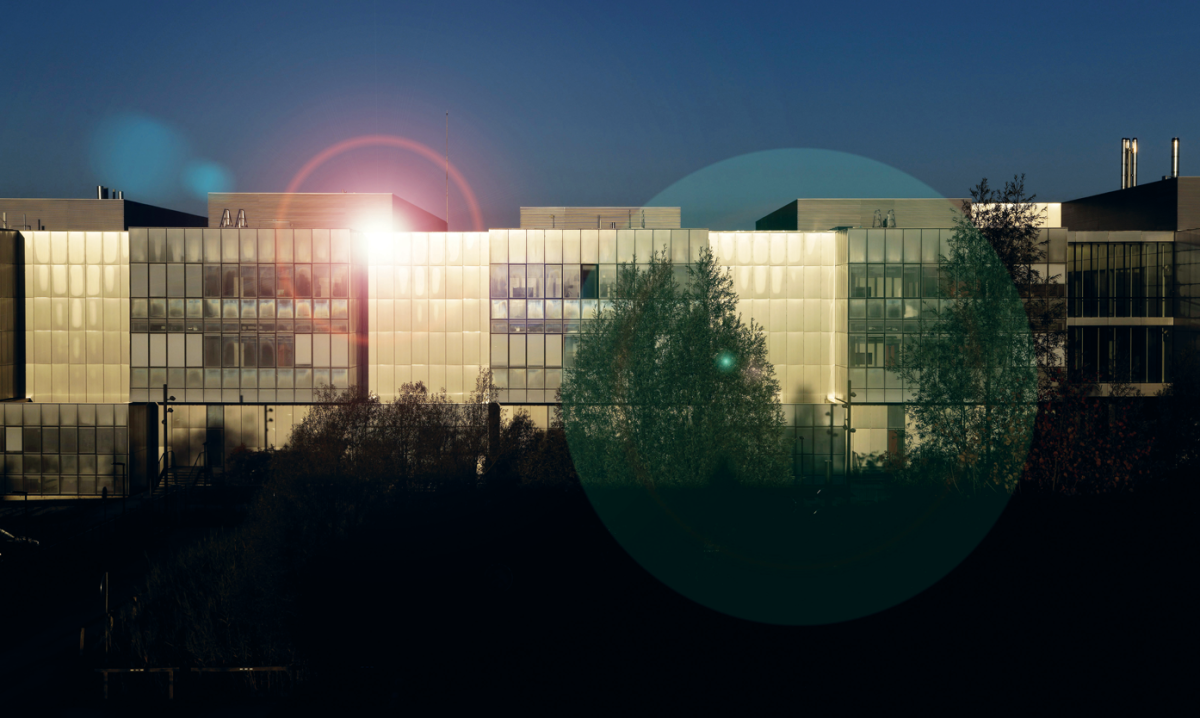
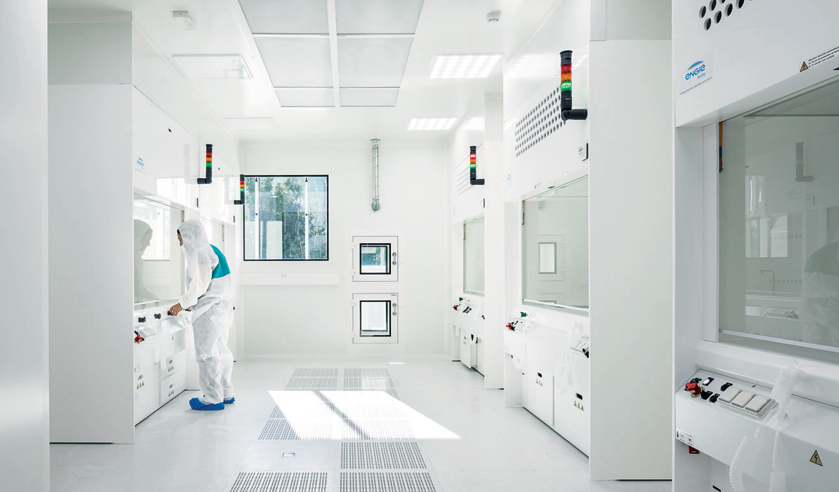
As a laboratory of excellence in French research, C2N develops fundamental and applied research in the fields of materials, nanophotonics, nanoelectronics, nanobio-technologies, microsystems and nanotechnologies. It has one of the largest academic nanotechnology centres in Europe. The C2N platform uses fast ions that are converged to locally etch a target, particularly microelectronics, with a resolution of around 10 nanometres. This “scalpel” is used to cut integrated circuits with very high integration density to detect failures, connection problems or architecture problems. This is a pioneering technology in Europe, based on ion sources that are more stable than the norm, the result of research carried out at C2N, which led to the development of nanoFIB, the highest-performance instrument in its class for manufacturing nanostructures using focused ion beams for the past 20 years: it is marketed in Germany by Raith, the world leader in tools dedicated to nanofabrication. In terms of research applications, the C2N platform uses focused ion beams, for example, to modify the interfaces of nanomaterials, to fabricate artificial defects as substrates for growing galium nitride nanowires for quantum optics or to generate nanosources of light. My ambition is to always be a step ahead in focused ion beam applications and to try to provide answers to the big challenge in terms of manufacturing technologies: moving from a top-down approach to building structures to a bottom-up approach.
Could you tell us about your expertise in focused ion beams and the applications of your work in space propulsion?
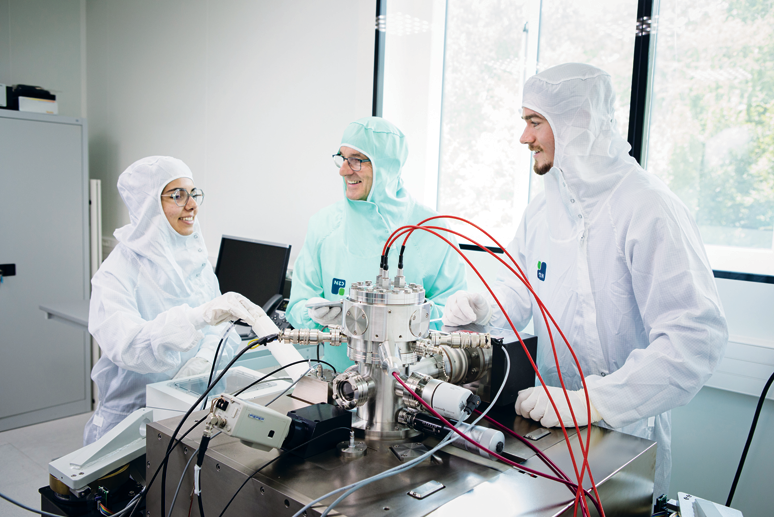
This technology involves mastering ion emitters that operate under extreme physical conditions to extract ions by means of an electrostatic field effect. It is the evaporation of this field that generates the production of fast ion beams using a technology that is unique in the world. This makes it possible to control the emission of ion beams with record stability both spatially (invariance of the position of the emitting site) and temporally (invariance of the emitted flux as a function of time). As a result, we have been approached by numerous national and international teams, including MIT. More recently, CNES and Airbus DS approached us to develop a space thruster solution based on the same principle of ion emission by field evaporation. With the help of CNRS Innovation, we built a demonstrator. As a player in academic research, we couldn’t go any further.
Hence the creation of the Ion-X start-up…
Exactly! I co-founded it in May 2021 with the support of Techno Founders. It acquired the 3 patents filed by the CNRS as well as the technical know-how accumulated by 4 colleagues in the laboratory. Its objective is to industrialise the concept of our demonstrator in order to build several types of engine that meet the criteria of the missions assigned to them. The first engine will be marketed at the end of 2024 as part of a test flight by a company specialising in measuring orbiting parameters. This test flight will benefit from the technology developed at C2N, based on a rather crazy idea: thinking outside the box thanks to our expertise in focused ion beams, their controlled generation and the use of “exotic” materials.
What is the FIB Nanowriter tool and what applications could graphene have?
One of the applications of focused ion beams has been to demonstrate the feasibility of piercing small holes in graphene membranes to study the passage of unfolded and extruded DNA strands in an aqueous system, in order to replicate the viral infection mechanism of a cell. Another application uses the defects created on graphene substrates to localise the growth of galium nitride nanowires: this is very interesting for the manufacture of single photons with wires less than 100 nanometres in diameter. More than ever, we want to make this tool available to researchers and develop the process by pooling our different areas of expertise.
Originally published in ©Parlementaires de France Magazine, now ©Research Innov France.
