
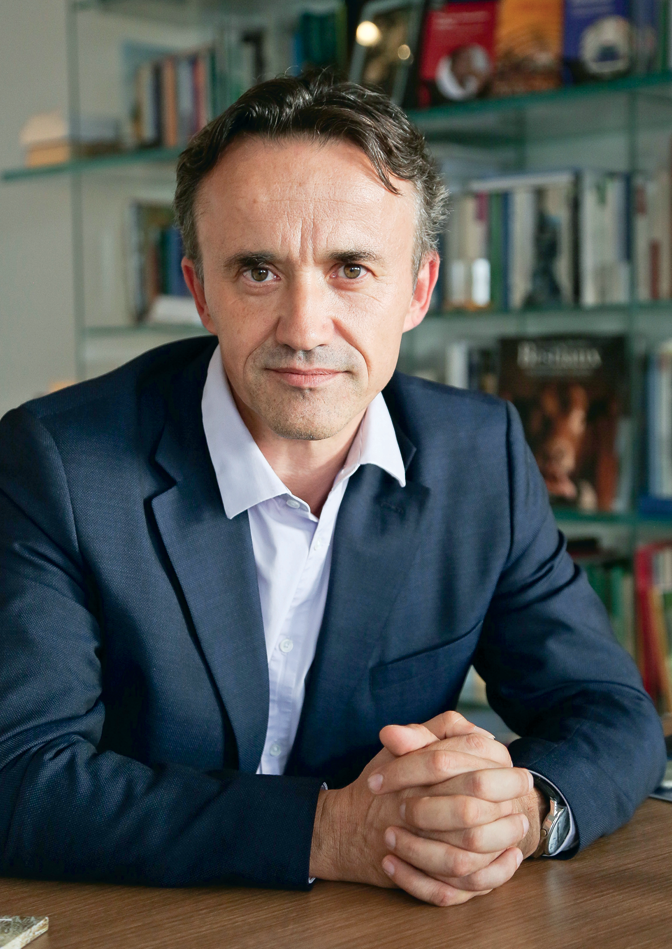
Interview with Mr Philippe MAUGUIN, CEO of the National Institute for Agricultural Research (INRA).
Reconciling environmental performance, new nutritional expectations and economic performance in agriculture
Could you tell us about the main research topics of the INRA and give us a few examples of research projects in progress?
The INRA produces knowledge and innovations in the fields of nutrition, agriculture and the environment to guide the transition to ecological agriculture and face up to the challenges of world food safety and climate change. Ensuring that everyone has a healthy, sustainable diet and allowing our farmers to adopt higher performing and more sustainable practices requires us to explore the decisive factors in these transitions to suggest solutions. This approach makes complete sense given our mission to support public policies.
I would like to highlight here the excellent work conducted on grapevines and wine, resulting in new varieties of vine that are resistant to downy mildew and powdery mildew, allowing a reduction in the use of pesticides of over 80%. These results come after nearly 30 years of research and show that the changes expected by society and stakeholders are possible. I would also like to give you an example of the transition of our agricultural models with the challenge of culture diversity and the necessity of soil coverage. This has to involve research on the development of cultures such as legumes, which so far have not been sufficiently valued in human nutrition. Designing new products combining cereals and legumes is one way of combining environmental performance and new societal nutritional demands.
Could you tell us about your activities in innovation, technology transfers and offers, and talk about research partnerships you have developed?
The INRA has to stay at the leading edge of knowledge and technology, and plays a key role in innovation through its fundamental research, collaborations with industrial partners, and its involvement in pre-competitive innovations, or in supporting the creation of innovative companies. Since 1999, 108 start-ups have been created. Our innovation strategy targets 17 priority fields, for example PlantInnov, working towards sustainable competitiveness in growing plants.
The vitality of the partnerships formed by the INRA’s scientific teams is shown through our involvement in 9 Territories of Innovation of Great Ambitions (TIGA) accepted as part of the Future Investment Programme (PIA3). The TIGA VitiRev aims to make Nouvelle-Aquitaine a region of excellence in the viticulture of tomorrow, while the regional innovation laboratory ‘Ouest Territoires d’Élevage’ aims to improve the rearing conditions and well-being of farm animals. Finally, the internationalisation of our partnerships is strategic. From the Mediterranean coastline to the fringes of China, where the 4 for 1000 initiative in food safety and climate takes on its full meaning, the INRA is a stakeholder in around 20 linked international laboratories across the world.
In your opinion, what are the major challenges to come in the field of research and that the INRA must tackle?
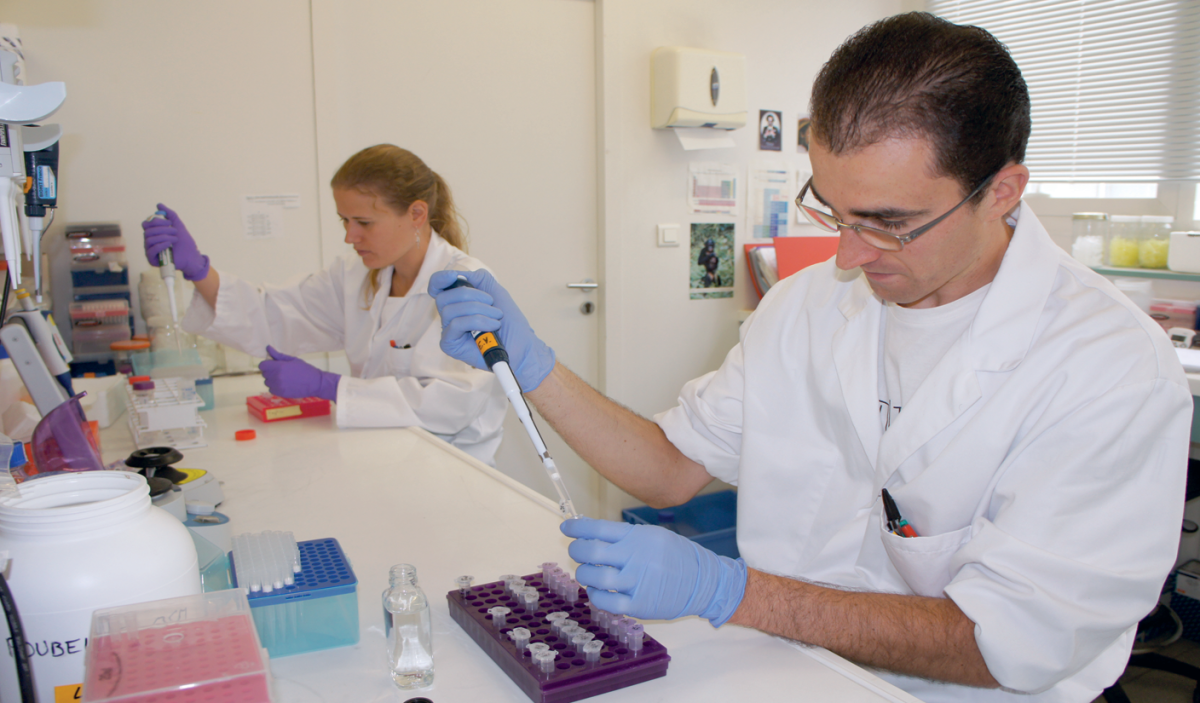
The INRA will continue to step up the interdisciplinary nature of its research through broad thematic programmes. Moreover, the global competition of the research sector will force us to step up our strategic partnerships and cooperations at European and international level, while deepening our partnerships with economic stakeholders. The aim is to accelerate innovation in the major areas of science. All of this will be carried out in a context of digital transition, and artificial intelligence will need to be applied to the major challenges of sustainable development. The merger of the INRA and the IRSTEA at the beginning of 2020 will allow us to step up our leadership in the fields of digital agriculture, water, natural risk prevention and the bio-economy.
The INRA in figures (2017)
Leading European agricultural research institution;
Ranked second globally in agricultural science publications;
A community of 13,000 individuals;
Over 250 laboratories in 17 regional research centres;
340 patent families, 443 new plant variety certificates and 181 software programs and databases;
980 active contracts with one or more partners
Originally published in ©Parlementaires de France Magazine, now ©Research Innov France.
