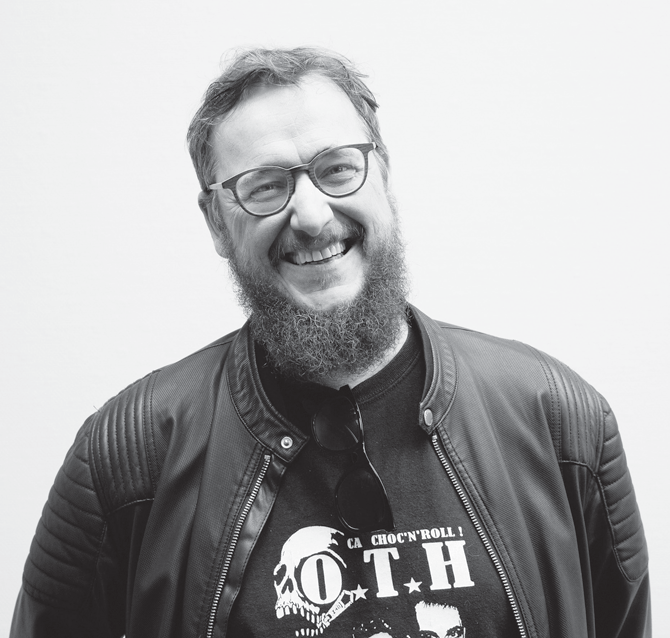
An interview with Prof. Patrick LE CALLET, Nantes Digital Science Laboratory (LS2N), Nantes Université, Polytech Nantes, Institut Universitaire de France
Towards virtuous models of open innovation
Could you tell us about the work of your research team?
As a professor at Polytech Nantes (Nantes University) and the Institut Universitaire de France, I conduct interdisciplinary research with a multidisciplinary team that studies human visual perception in four areas. The first area, experimentation with humans, involves developing methods and protocols for characterising the perception of colours and contrasts (psychophysics) and determining the quality and aesthetic value of an image (questionnaires, electrophysiology, eye tracking, etc.). Since data collection is costly, it can be optimised using active learning algorithms. The second area uses this data to design computer programmes and algorithms capable of modelling human perception. The third area relies on algorithms to adapt the presentation of information to the limits of human visual perception, such as intelligent image compression methods that limit infrastructure costs, energy consumption and carbon footprint, and create more inclusive, “greener” ergonomic interfaces. Finally, the fourth area, “cognitive computing”, aims to develop more efficient artificial intelligence models, with less data, intuitive programming by example and imitation. In all cases, our aim is to improve the quality of the end-user experience and ensure that visual information is frugal and efficient. We are also exploring the perceptual limits of machines as the ultimate recipients of images. These different areas of research have applications in image processing, of course, but also in design sciences, ophthalmology, neuroscience, AI, etc.
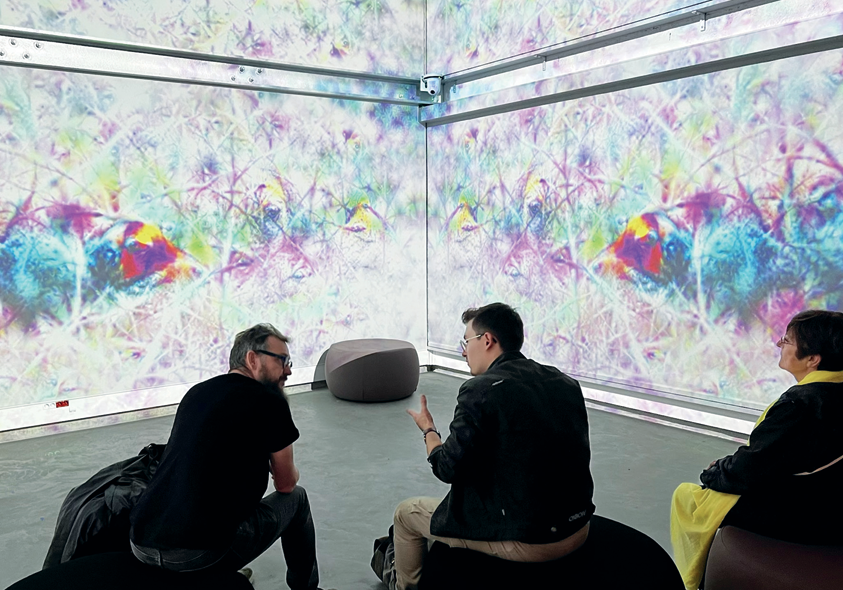
Machine dreams: MRI scans of artificial intelligence algorithms show what happens in a machine’s brain when it “dreams”
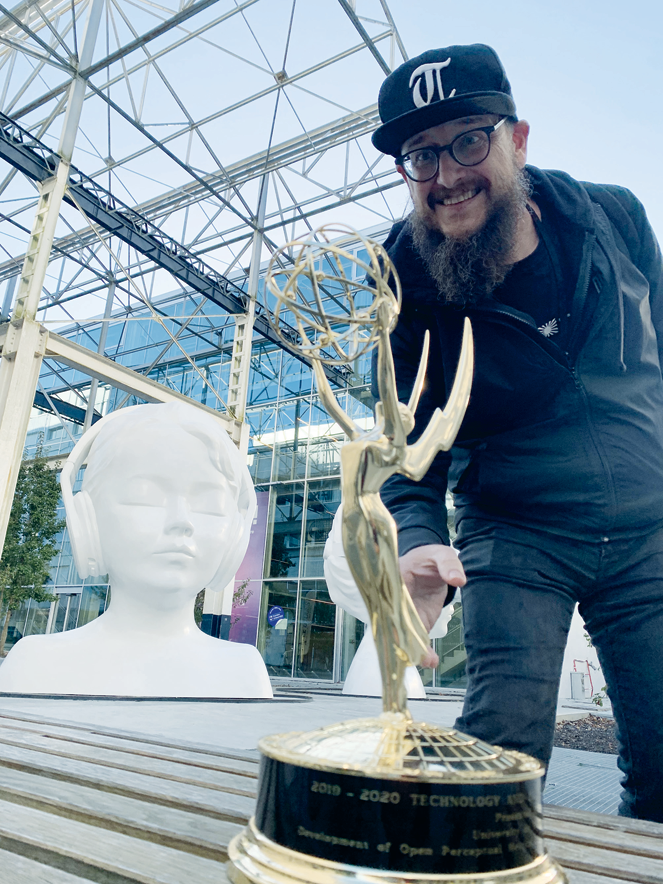
Could you talk about the Emmy® Award for Technology and Engineering that you received from the American National Academy of Television Arts and Sciences in October 2021?
It’s a model of open innovation and a first for a non-American university professor! This technology for automatically assessing the quality of images and videos adapts the compression recipe to each film segment, using an algorithmic tool that measures the quality of the image after compression. This innovation is part of a strategy to disseminate culture for all and across all cultures, while reducing the carbon footprint of streaming. Netflix is no exception, having been the first user! What’s more, this technology has given rise to an ecosystem of video engineers using it all over the world, as well as major corporate sponsors and companies interested in co-developing patents: just goes to show that the mass use of a technology can have a major impact on the general interest! The open innovation approach that my team and I have adopted has led to a large number of high-impact collaborations with international ecosystems. A fluidity that has yet to be created in France…
Other projects are close to your heart…
As part of my chair in fundamental research at the Institut Universitaire de France, I use virtual reality and artificial intelligence to demonstrate the clinical effectiveness of gene therapies on the quality of life of patients suffering from vision disorders: this makes it possible to demonstrate the medical service rendered and therefore to justify reimbursement of the treatment. I am very involved in the dialogue between science and society through conferences and scientific outreach activities. I also promote intermediation spaces to bring research to life beyond polarisation.
How do you see your future as a researcher?
I want to put my experience at the service of creating virtuous models of open innovation that bring together all the stakeholders on key issues. I also want to help identify the expectations of civil society in the context of the SDGs: it’s up to us to make the latter desirable in order to invent a new economic model compatible with the transitions underway. My work draws on real-life experience, myth and imagination. The aim is always to improve the quality of experience and of life: quantifying experiences enables new ones to be designed, the digital transition is used to support the circular economy… As well as being a laboratory, the Ile de Nantes is an ideal location for co-designing products or services with the public, thanks to the Nantes City Lab and the Creative Factory: synergies that are largely stimulated by the support of the local authorities. Support that should also be national and European!
Originally published in ©Parlementaires de France Magazine, now ©Research Innov France.
