
An interview with Prof. David ALIS, President of the University of Rennes and Prof. Muriel HISSLER, 1st Vice-President in charge of Research
Society needs science to meet the twin challenges of ecology and digital technology
What are the key figures and areas of research excellence at the University of Rennes?
Prof. David Alis (D.A.). First of all, the Université de Rennes is an experimental public institution created on 1 January 2023 by decree of Prime Minister Elisabeth Borne. It comprises five component institutions (EHESP, ENSC Rennes, ENS Rennes, INSA Rennes, Sciences Po Rennes), three associated institutions (Université Rennes 2, Institut Agro Rennes Angers, ENSAI) and four research organisations (CNRS, Inserm, Inria, INRAE). With 37,200 students, 4,500 staff and 36 laboratories and research structures, it ranks in the top 500 of the Shanghai ranking thanks to its 23 disciplines of excellence and its very large research units in computer science (IRISA), electronics (IETR), mathematics (IRMAR), chemistry (ICSR), physics (IPR) and biology-health (Irset). I would also like to mention EHESP’s expertise in the exposome and global health, in close collaboration with Anses, not forgetting our Observatory of the Sciences of the Universe, chosen to train senior civil servants and elected representatives in the issues of biodiversity and climate change.
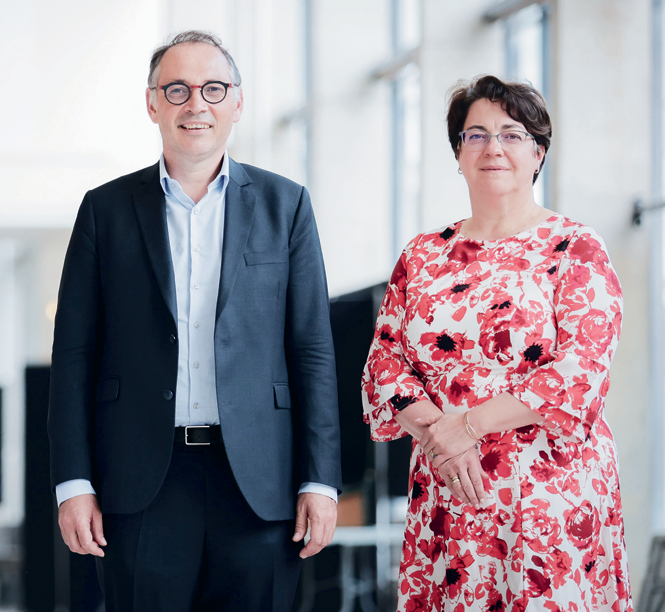
David Alis and Murielle Hissler
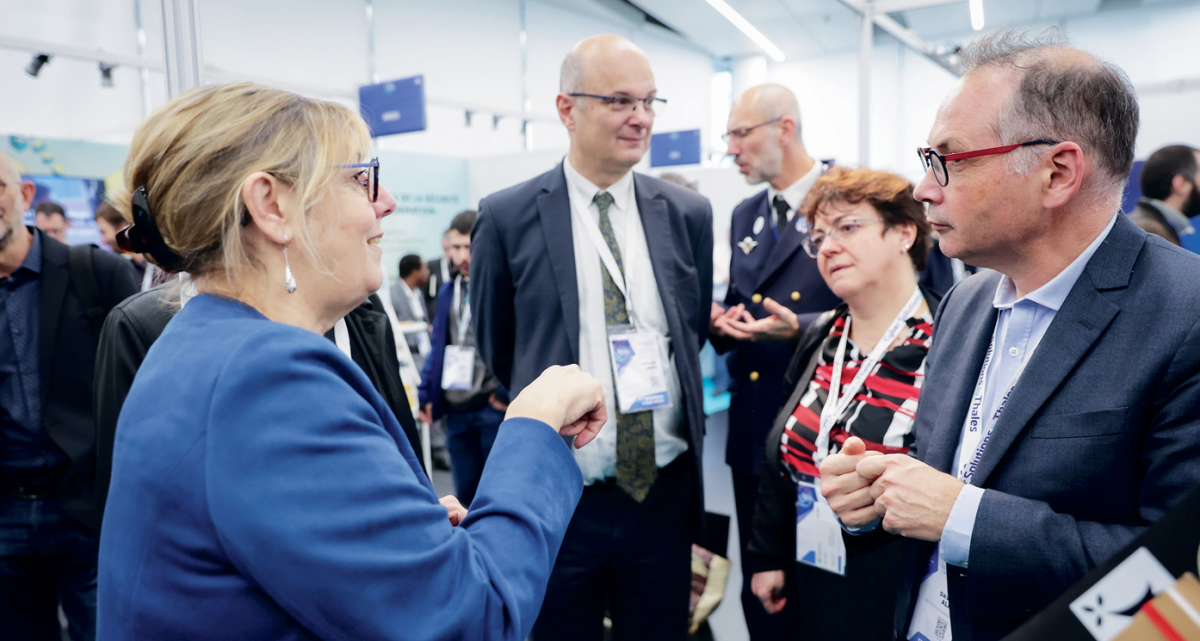
Minister for Higher Education and Research, Sylvie Retailleau, at European Cyber Week in Rennes, November 2023. She met teams from the Cyberschool research school, the CyberSkills4All programme and the IA-Cluster project.
Could you tell us about the ExcellenceS IRIS-E (Interdisciplinary Research & Innovative Solutions for Environmental transition) project?
Prof. Muriel Hissler (M.H.). Bringing together fifteen partners, our IRIS-E project is dedicated to the environmental transition in connection with digital technology, global health, green chemistry, human and social sciences… It was jointly created with the greater Rennes Council, Rennes Métropole, and the Regional Council of Brittany, Région Bretagne, for the purpose of bringing about a lasting balance between our production activities and our environment in order to enhance resource sustainability, biodiversity, and contribute to protecting ecosystems and preserving human health. With the Iris-E project, our ambition is to become a leading European laboratory on these issues. The first results are already in: a new Environmental Sciences department at ENS Rennes with a PhD Track, the CPES (multidisciplinary studies cycle) in Science-Health-Environment, a participatory and citizen science initiative known as “Science with and for Society”, the first research projects with the Iris-E label, several research chairs on water and biodiversity, the upcoming launch of a “participatory science hub”, a support system for the emergence of action research projects, etc.
How does the University of Rennes support innovation?
D.A. Thanks to the University Innovation Cluster label, of which we are the leader! The €7m endowment will enable the University of Rennes’ new Innovation Campus to consolidate the dynamics of our ecosystem, stimulate the continuum between research and innovation and accelerate the transfer of projects emerging from research laboratories to society: joint laboratories, industrial or research chairs, industrial contracts, Cifre theses, sponsorship, etc. All in partnership with SATT Ouest Valorisation, local authorities, technology parks and an incubator. In short, a single gateway with 44 partners and 5 areas of strategic innovation (digital, energy, territories, health and environmental intelligence).
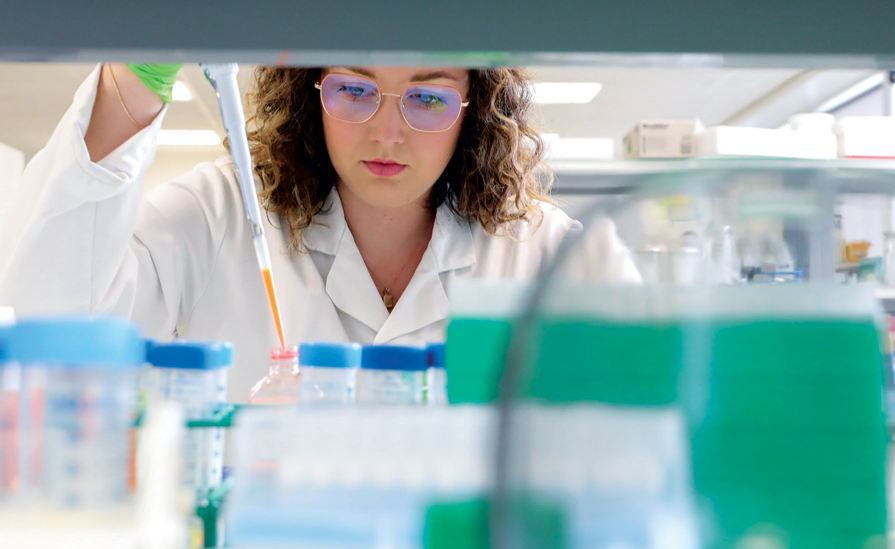
Irset, a major interdisciplinary research centre in human health, studies environmental and occupational risks. It hosts France Exposome, a national infrastructure aiming to support excellence in environmental health research.
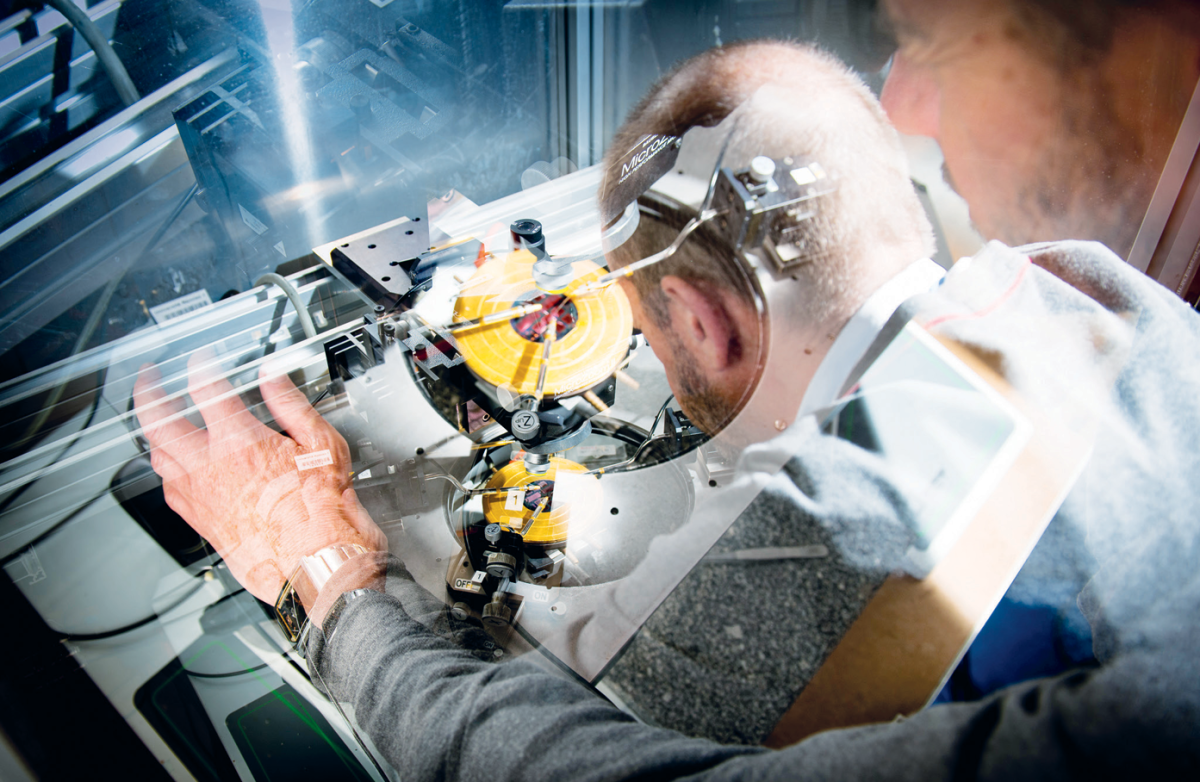
At IETR, a public research laboratory specialising in electronics and digital technologies, the CYBER ELEC platform allows researchers to simulate attacks.
Could you tell us about the major IA-Cluster SequoIA project submitted in the autumn?
M.H. The SequoIA – Security, Confidence, AI – project focuses on the interdisciplinary foundations of AI and its applications in the fields of cybersecurity, defence, the environment and the sea. This project, which is driven by the University of Rennes, combines the complementary expertise of leading Breton higher education and research institutions in mathematics, computing, electronics, environmental and ocean sciences, humanities and social sciences in collaboration with industry and public bodies. In parallel, we have also responded to the “Skills and Professions of the Future” (CMA) and the “Priority Research Programmes and Material-AI” (PEPR IA) calls for projects. All of these complementary projects will boost our visibility at European and international levels.
D.A. With our SequoIA project, we want to make Brittany a European and global centre of excellence in AI applied to cybersecurity, defence and the sea. This project is supported by the EDUC European alliance, of which the Université de Rennes is a member, as well as by strengthened collaboration with Canada and Japan. For the Université de Rennes, research must feed into public policy, training, businesses, administrations… and society as a whole!
Originally published in ©Parlementaires de France Magazine, now ©Research Innov France.
