
An interview with Mrs Marie-Christine JAULENT, Director of the Laboratory of Medical Informatics and Knowledge Engineering for e-Health (LIMICS, unit 1142 Inserm / Sorbonne University / Université Sorbonne Paris Nord), Inserm Research Director
LIMICS: artificial intelligence at the service of health innovation
Could you present the key figures and LIMICS’ expertise in e-health?
LIMICS is a single-team and interdisciplinary research unit in computer science and medical informatics focused on the development of innovative decision-making systems. Placed under the supervision of Inserm, Sorbonne University and Université Sorbonne Paris Sud, the laboratory has 55 members. It also collaborates with 5 AP-HP sites (Tenon, Avicenne, Rothschild, La Pitié Salpêtrière and Trousseau hospitals) and hosts the Rouen University Hospital team in charge of developing CiSMeF and HeTOP.

What are your main research themes?
We work along two main lines: knowledge engineering and health information systems on the one hand, and decision support and artificial intelligence on the other. Knowledge engineering in health leads us to formalise guides to good practice and to develop ontologies for medical fields that allow us to annotate health data, whether they are buried in explicit sources (scientific articles, reference books, patient records, etc.) or implicit (born of observation). This formalisation makes the health data usable by the algorithms.
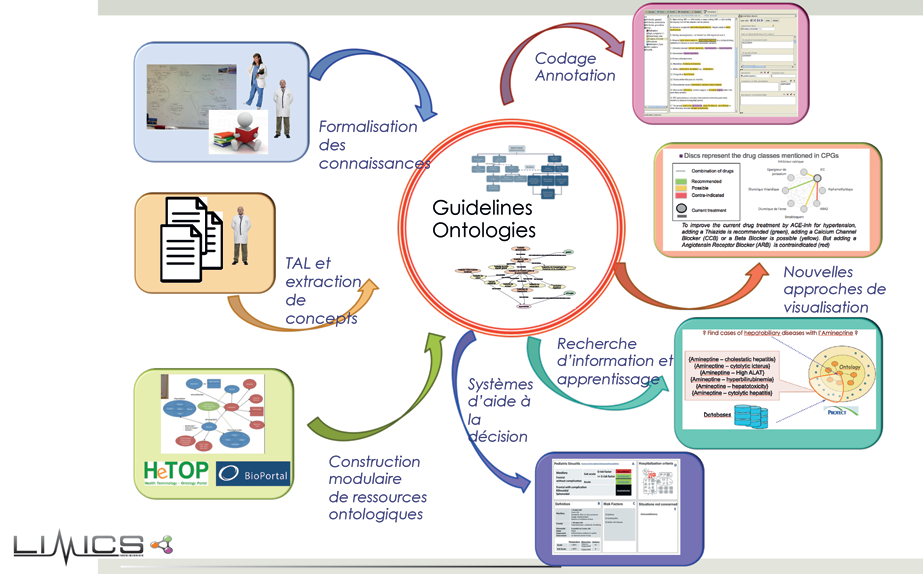
As an example, our work has contributed to European research projects on people suffering from several chronic diseases. The aim was to reconcile the guides to good practice and to bring different medical specialties into dialogue to develop consensual care plans.
As for computer ontologies (data models representing a set of concepts and their relationships), they are useful for describing knowledge for comparative purposes and enable algorithms to integrate heterogeneous data. The aim is to give meaning to the data so that they can be shared and reused correctly. This is semantic interoperability: data is given meaning in a context different from that in which it was produced, shortening the time for innovation by refining clinical trial criteria.
What about the valorisation of implicit knowledge?
We are looking for potentially interesting information from data collected for care or research that could represent new knowledge. Public data generated by e-health, patient records, silver economy and connected objects provide the raw material for learning algorithms.
These are self-learning health systems that operate in four stages: collecting, annotating and structuring to make new data interoperable and integrable; then generating new knowledge; operationalizing it in decision support systems; and evaluating the impact and improvement of practices.
Could you give us a few examples of current projects at LIMICS?
We have been working with the ANSM for sixteen years on a major pharmacovigilance project. AI is very useful in this field because it identifies “weak signals” from social network testimonies. Retrospective studies on the Mediator enabled us to determine associations between the drug and its adverse effects before the first official cases were reported. Automatic language processing algorithms are essential here for analysing textual health data.
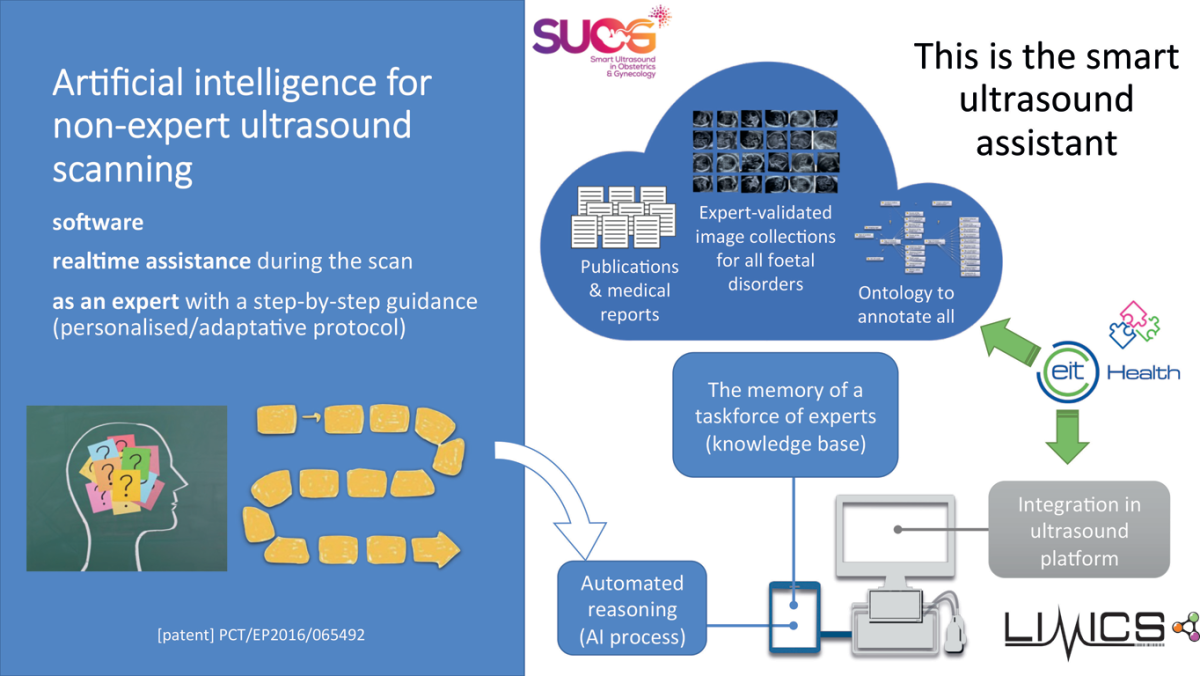
In your opinion, what are the main challenges to be met in order to achieve ever more innovative health information systems?
We will have to solve ethical problems due to errors made by algorithms: who bears the responsibility? I advocate a digital ethic to govern the use of AI systems. Moreover, AI is promising for verifying the therapeutic interest of new molecules, but we are far from mastering everything: systems are often incapable of explaining their decisions. On the other hand, they can see what man can no longer see with the naked eye due to the mass of data. They are therefore of great help in speeding up the search for new medicines.
Originally published in ©Parlementaires de France Magazine, now ©Research Innov France.
