
A joint research unit of the University of Lille and the CNRS, the Laboratory of Atmospheric Optics specialises in modelling radiative transfer and in monitoring the properties and changes in atmospheric parameters at both local and global scales. At the same time, the laboratory is developing innovative instrumentation to carry out measurements on the ground and on various mobile platforms. A detailed overview of its research and the challenges ahead.
Laboratory of Atmospheric Optics – LOA: Gaining a better understanding of and quantifying the properties and impacts of atmospheric components
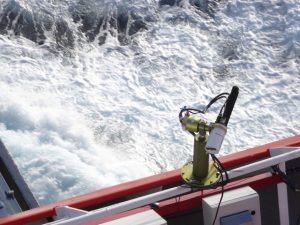
Observing and analysing the composition of the Earth’s atmosphere from space or the ground, by aircraft, remote sensing or in situ measurements, at local or global scales: this is the core mission of the LOA. The Laboratory studies clouds and water vapour, aerosols and certain gases (greenhouse gases, aerosol precursors, etc.) with a view to providing a detailed description of their macro- and microphysical properties whilst taking their environment into account. The LOA is also very active in modelling radiative transfer and radiative impacts, inversion of measurements and the study of air quality in order to better describe these components in numerical forecast models (weather and climate). “We also study extreme events such as volcanic plumes, those emitted by mega-fires, peaks in air pollution and deep convection,” explains Prof. Philippe Dubuisson, Director of the LOA.

5 research areas
The laboratory’s research activities are divided into five main areas: radiative transfer and its applications for simulating satellite, airborne or ground-based observations; the use and development of remote sensing to characterise clouds, water vapour and their radiative effects; the study of cloud processes from the local to the global scale; the measurement and characterisation of aerosols from biomass burning (BBA) or volcanic aerosols using innovative solutions (instrumental, methodological, algorithmic); the life cycle, variability and impacts of aerosols to better understand their radiative, environmental and health impacts. “Our aim is to make full use of all the observation and computational tools developed by our teams to better understand and quantify the properties and impacts of aerosols and clouds on air quality, meteorology, climate and health,” emphasises Prof. Dubuisson.
European recognition
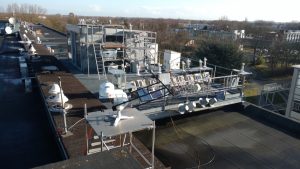
On 8 December 2025, the LOA received a significant European accolade: its aerosol components (remote sensing and in situ) were accredited within ACTRIS (Aerosol, Clouds, and Trace Gases Research Infrastructure), a European infrastructure that coordinates measurements to characterise short-lived atmospheric components. “This recognition enhances our laboratory’s visibility and ensures a high standard of quality for the aerosol measurements made available to the scientific community,” says Prof. Dubuisson. This is a significant asset within the framework of the OSU (Observatory of Universe Sciences), currently being established at the University of Lille.
Exciting research challenges
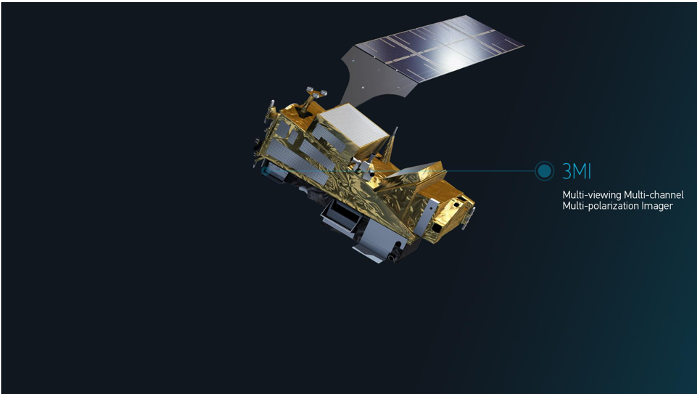
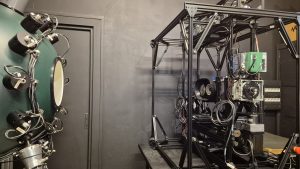
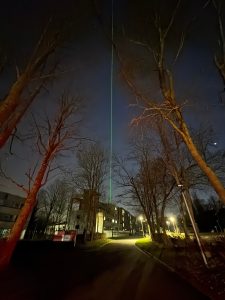
For the time being, the LOA has no shortage of research challenges to tackle. These include modelling radiative transfer using more powerful numerical codes with high spectral resolution, observing the properties and changes in atmospheric parameters on a global scale (space missions 3MI and IASI-NG (2025–2040), MicroCarb (2025), FORUM (2027), C3IEL (2028…)) and the development of innovative instrumentation (fluorescence lidar technology, next-generation airborne polarimetric polariser, airborne photometry, etc.). “One of the major challenges is to develop the best strategy for making the most of the vast wealth of existing and future observational data – from ground-based measurements (remote sensing and in situ), network-based data, and satellite data – whilst playing an active role in the development and operation of European observation systems in collaboration with CNES, EUMETSAT and the ESA,” explains Prof. Dubuisson. Not to mention the development of new approaches in numerical methods and data management and analysis: machine learning, AI and, in the longer term, quantum computers. These are all exciting prospects for the LOA.

Laboratoire d’Optique Atmosphérique – LOA – UMR 8518
Département de Physique – Bâtiment P5
Faculté des Sciences et Technologies, Université de Lille
F-59655 Villeneuve d’Ascq Cedex
Tél. : +33 (0)3 20 43 45 32 / +33 (0)3 20 33 62 98
E-mail : loa-secretariat@univ-lille.fr
