
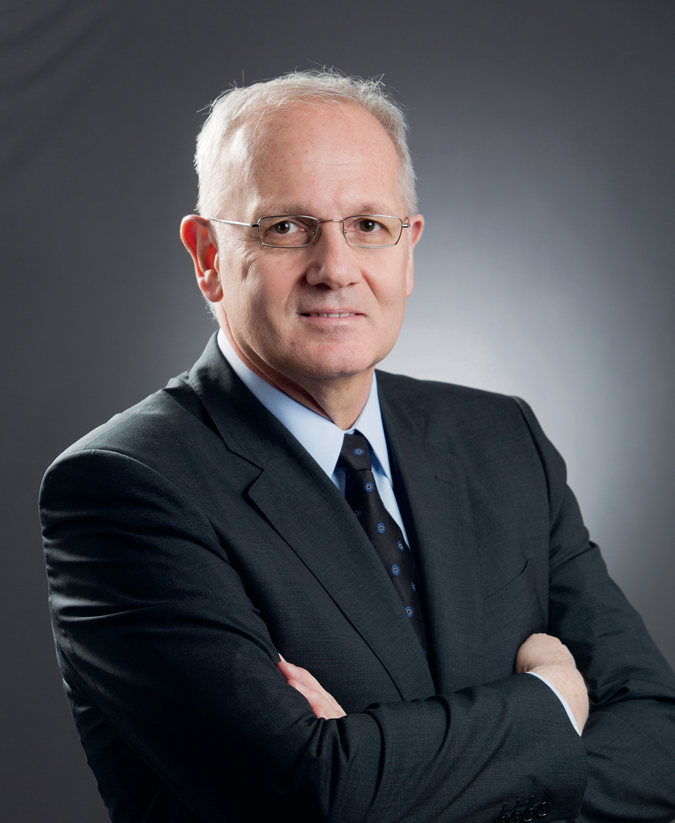
Interview with Mr Jean-Yves LE GALL, President of the National Centre for Space Studies (CNES).
Faith in innovation, the European project and international cooperation
What are the key figures of the CNES?
Founded in 1961, the CNES has 2,400 employees across four excellence centres. Its budget, which has reached 2.4 billion euros in 2019, goes towards funding research and technology, the European space programmes (the CNES is the leading contributor to the budget of the European Space Agency) and those conducted via international cooperation. In the past ten years, the CNES has submitted 465 patents (systems and launchers) and signed 32 international agreements in 2017 alone.
Could you tell us about the four excellence centres and five areas of activity of the CNES?
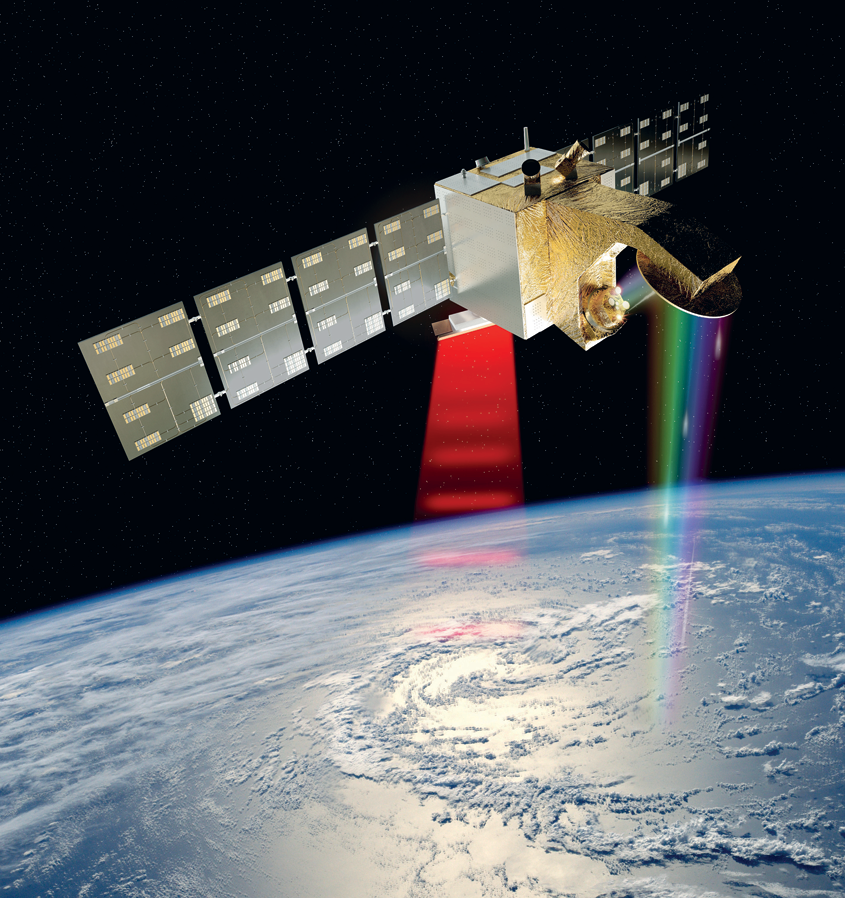
The CFOSAT (China-France Oceanography SATellite) satellite was put into orbit on October 29 to study wind and waves on the surface of the oceans. These data will allow for more reliable predictions of the state of the sea, as well as a better understanding of the interactions between the ocean and the atmosphere.
Located in the 1st arrondissement in Paris, our headquarters draw up and implement our space policy. The CNES also has a Launcher Directorate (Ariane) at the Paris Daumesnil site in the 12th arrondissement. Moreover, it is renowned for the Toulouse Space Centre (CST), vehicles and orbital systems, where 72% of our staff are located. And of course don’t forget the French-Guiana Space Center (CSG), where Ariane, Soyouz and Vega are launched: it acts as Europe’s space port.
As for CNES’ five fields of activity, they are launchers, ensuring independent access to space; space science, providing answers to fundamental questions about the origins of the solar system, galaxies and life itself; observing the Earth using satellites; high-speed telecommunications, location services, the collection of environmental data, research and rescue; and defence.
Could you give us a few examples of projects at the CNES?
In 2018 the CNES focused on three major projects. On 19 October 2018, the ESA and JAXA (Japan Aerospace Exploration Agency) mission, BepiColombo, was launched towards Mercury. The CFOSat (Chinese French Oceanography Satellite) satellite was put into terrestrial orbit on 29 October 2018 to study the wind and waves at the surface of the oceans. Its data will enable more reliable predictions of sea conditions. Finally, InSight (INterior exploration using Seismic Investigations, Geodesy and Heat Transport) landed on Mars on 26 November 2018 with the French seismometer SEIS, which will study the internal structure of Mars to better understand how rocky planets are formed.
Who are your European and international partners?
In Europe, the CNES is the leading partner of the European Space Agency. It also actively participates in two major programmes for the European Commission, Galileo for geolocation and Copernicus for studying the environment. Internationally, for nearly 40 years the CNES has been maintaining an iconic cooperation with NASA in oceanography and studying Mars. China is another privileged partner, as seen with CFOSat as well as SVOM (astrophysics) and Cardiospace (space medicine). The CNES cooperates with India for atmospheric research (Megha-Tropiques) and altimetry (Saral-AltiKa). We also have a highly ambitious partnership with Japan and the MMX mission, aiming to retrieve a sample from Phobos, one of Mars’ moons. And with Russia, we are launching the Soyouz spacecrafts from the French-Guiana Space Center.
In 2016 a Directorate of Innovation was created within the CNES. Could you tell us about its activities?
This Directorate of Innovation, Applications and Science seeks to disseminate space technologies for the benefit of the general public. In fact, the use of space technology adapted to terrestrial needs is very promising in healthcare, agriculture, mobility, land and the environment. The CNES has already signed a number of agreements with industrial partners to put these technologies to use for the general population.
In your opinion, what are the main issues to come in the field of space research and applications?
Innovation, combating climate change and space exploration are undoubtedly the three biggest challenges being looked at in the space sector currently. For climate, we set up the Space Climate Observatory (SCO) which will pool data collected by the various space agencies. An initial demonstration took place in Toulouse in June 2018 and a charter listing all our partners will be adopted in 2019.
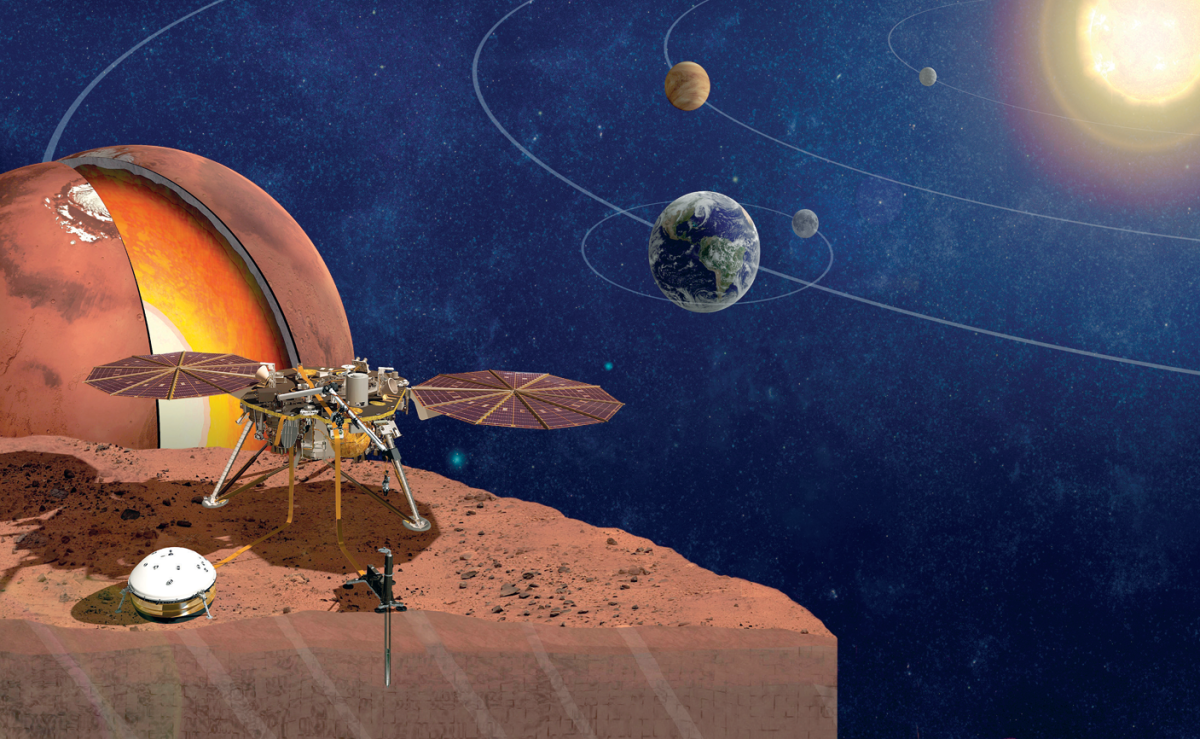
Illustration of the Landing Insight (INterior exploration using Seismic Investigations, Geodesy and Heat Transport). InSight aims to study the internal structure of Mars, through the deployment on its surface of a geophysical station, embedded in a fixed lander. It aims to elucidate the mechanisms that preside over the formation of rock planets in the solar system. Thanks to SEIS seismometer (Seismic Experiment for Interior Structures), the device will measure the tectonic activity of Mars, which will allow to deduce information about its structure (size of the core, thickness of the mantle …)
Originally published in ©Parlementaires de France Magazine, now ©Research Innov France.
