
One world, one health.
Based on the triad of environmental health, human health and animal health, DOH 2.0 is made up of 25 laboratories and teams in the Paris region. Since 2022, it has funded 7 doctoral grants, 7 post-doctoral grants and 10 large-scale equipment investment projects for regional laboratories.
DIM One Health 2.0 – DOH 2.0
Coordinated by Prof. Jean-Daniel Lelièvre, the DIM One Health 2.0 has two lines of research. The first concerns the causality/etiology and assessment of infectious risks, which involves documenting the multiplicity of relationships between humans, animals and their environment: host-pathogen interactions, environmental impacts on infections and the pathobiome, epidemiological surveillance, circulation of animal reservoirs, health policies in the face of infectious risks and the legitimacy of scientific discourse.
The second area of research concerns intervention and proposals for operational solutions. It covers diagnostic strategies for screening infections (sequencing, mass spectrometry, bioinformatics tools), epidemiological strategies (modelling), treatment strategies (repositioning molecules and research into new leads), prevention strategies (vaccine innovation, oral pre-exposure prophylaxis, monoclonal antibodies, etc.), communication strategies and social strategies.
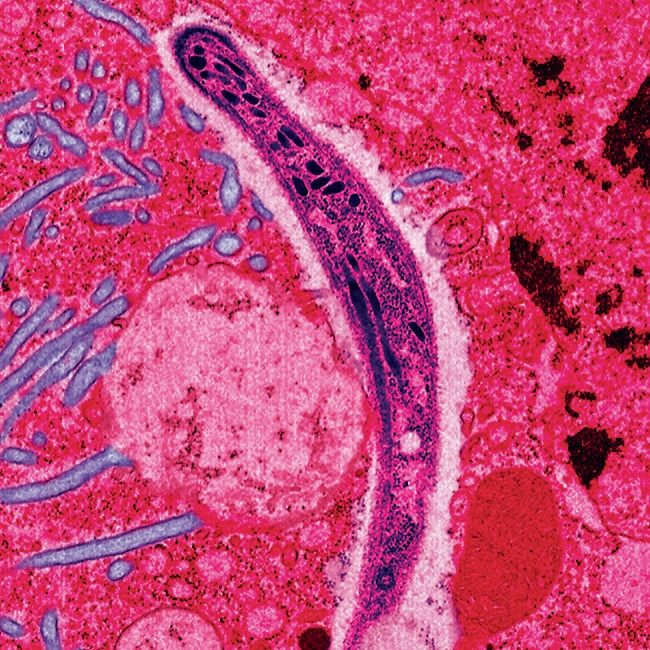
Sporozoite of Plasmodium bergei,
the agent of rodent malaria
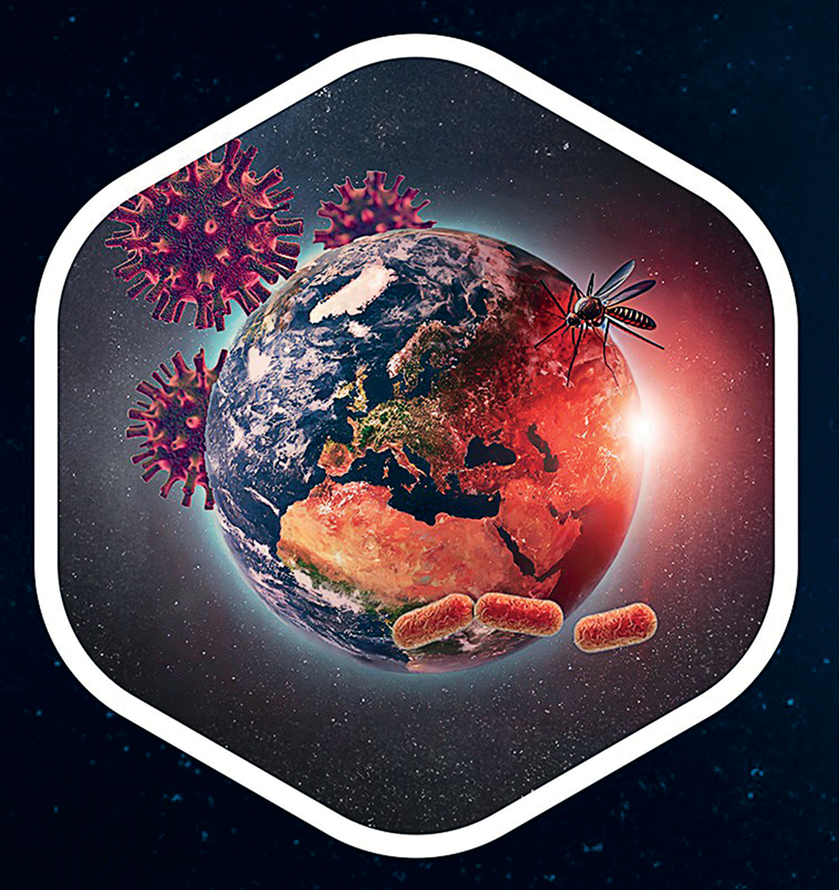
One world, one health
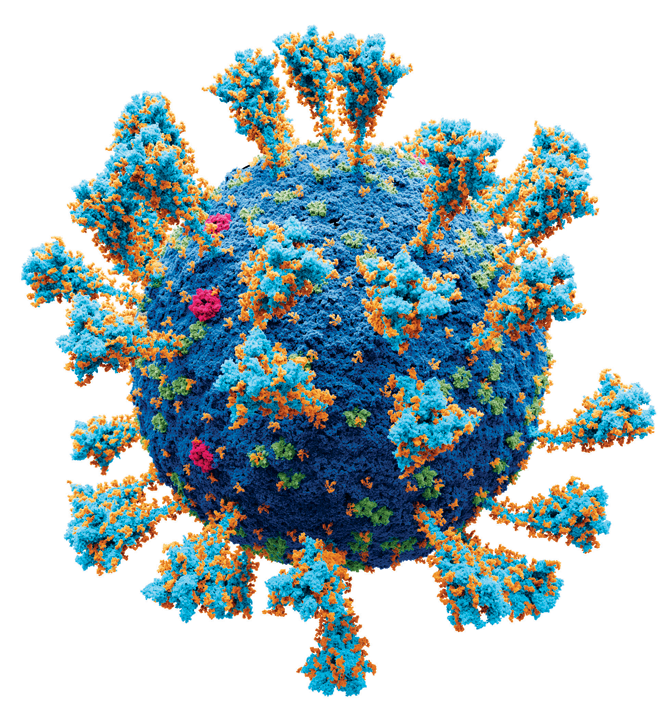
Scientifically accurate atomic model
of the external structure of the SARS-CoV-2
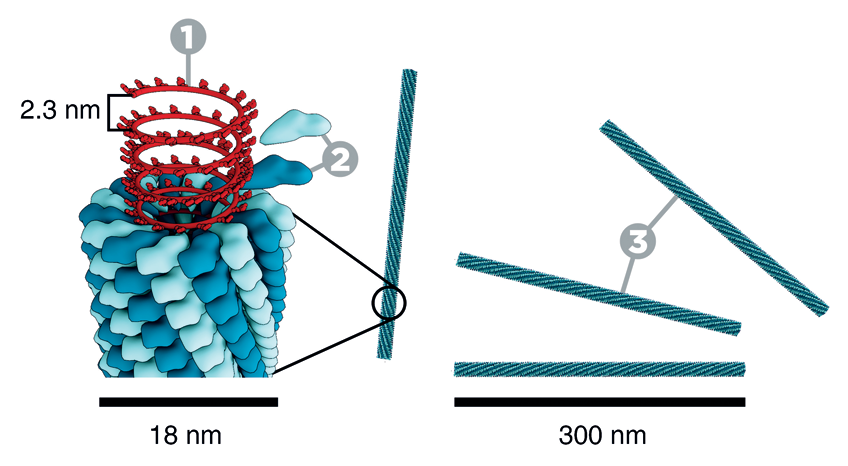
Schematic model of Tobacco mosaic virus
One of the projects supported by the DIM One Health 2.0 is “Host-parasite interactions in the liver and species barrier for malaria transmission”. The aim of this doctoral grant, awarded in 2022 to Olivier Silvie’s team (Inserm), is to determine the extent to which the first stage of infection could act as a barrier to zoonotic transmission of Plasmodium. The results of this multidisciplinary work (structural modelling, interaction tests, cell culture infection model) will help to better define the factors determining zoonotic transmission of malaria, to better understand the mechanisms of Plasmodium infection and to develop new prevention strategies. Another doctoral grant has been awarded to Samuel Alizon’s team (CNRS): “Using viral genomes to quantify the spread of epidemics using deep learning techniques”. The challenge is to use suitable algorithms to propose a new approach for estimating epidemiological parameters directly from viral genetic sequences. These methods, which will be validated using simulated data and clinical screening data on respiratory infections, should improve surveillance and enable a rapid, targeted response to emerging epidemics.
Finally, the MICROINF project (“Characterisation of the MICROinfectious environment by hyper-plex immunofluorescence for the physiopathological study of chronic, recurrent or relapsing infections”) involves the funding of a MACSima multiplexing imaging device for Sandrine Bourdoulous’ team (Institut Cochin). The aim is to use this high-performance system to understand why infections caused by certain pathogens cannot be successfully combated by the immune system and/or are resistant to treatment – a prerequisite for the development of new therapeutic tools or strategies.
For DOH 2.0, the challenge lies in the relatively new, cross-disciplinary nature of the discipline: at a time when climate change is having a major impact on infectious diseases, it is not always easy to reconcile the hard sciences and the humanities, veterinary medicine and human medicine… not to mention the need to take account of infectious diseases affecting plants in the near future. There is therefore an urgent need to use the results of fundamental research to develop an audible communication aimed at industry, politicians and the general public.
DIM One Health 2.0
GHU Henri Mondor
Service de maladies infectieuses
et immunologie clinique
1, rue Gustave Eiffel
F-94010 Créteil Cedex
Tel.: +33 (0)1 49 81 44 42
https://www.dim1health.com
Originally published in ©Parlementaires de France Magazine, now ©Research Innov France.
