
An interview with Mr Jean-Denis MULLER,
Managing Director of the Carnot Network
Could you remind us of the Carnot Network’s mission and key figures?
With 35,000 researchers, including 10,000 PhD students, and 400 public laboratories in 39 institutes, this network was created in 2006 to award a label of excellence in partnership research and to remedy the historical difficulty that academic research laboratories and companies have in working together. The Carnot Network encourages access to the best expertise (in AI, materials, health, the environment, energy, etc.) by signing direct contracts, the annual assessment of which, drawn up by the ANR (National Research Ahency), makes it possible to calculate a top-up, i.e. an investment that will finance more upstream research to prepare for future innovations. Every year, more than 10,000 contracts are signed (i.e. one every 10 minutes), a business volume of €600m (i.e. 55% of R&D activity financed by companies for 20% of researchers), and around a hundred start-ups created (out of the 500 set as a national objective), around 30,000 A-rank publications (proving the excellence of scientific research serving industry), 40 new joint teams and 900 patents published, putting the Carnot Network in the top 3 of French patent filers (with a heavyweight like the CEA), alongside the most innovative industrial companies.

What is the state of partnership research in France and what is the Carnot Network’s contribution to this?
The Carnot Network has increased its business volume by a factor of 3 since it was set up – a volume that has even increased by a factor of 8 for SMEs. It is more difficult to bring laboratories and small businesses closer together, due to the lack of staff available to monitor an innovation project. The ground lost 20 years ago has not yet been completely made up, because French companies invest less in innovation and research than their foreign counterparts and are less inclined to collaborate with research laboratories. But competitiveness depends on technological differentiation, so companies are being encouraged to invest massively in R&D, and the Carnot Network can help them to reach the highest international level very quickly by setting up joint teams that have an accelerating effect on the industrial partner.
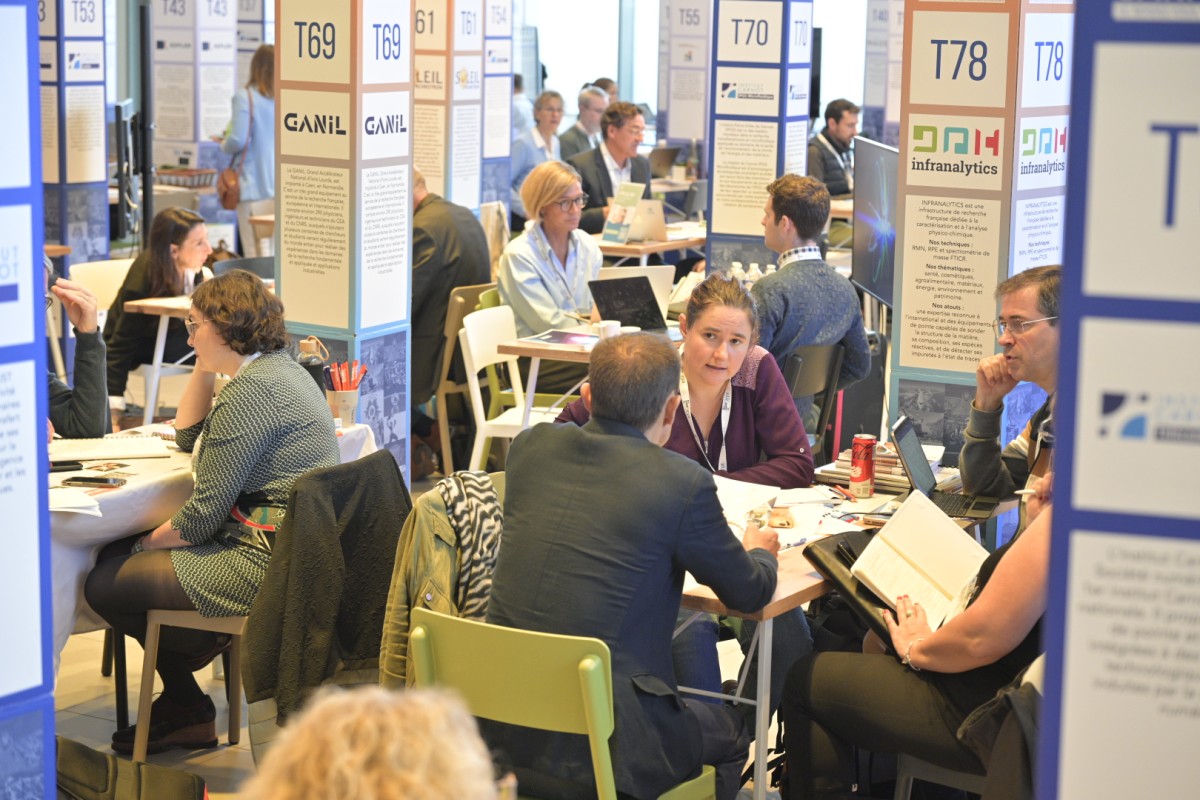
Les Rendez-vous Carnot. © Stefan Meyer
Could you describe the services you offer companies?
The Carnot Network positions itself as a partner for industry, listening to its business needs, its need to differentiate itself from the competition and its need to develop a new product or service. Gone are the days when a technology was developed without knowing which market it might be suitable for. For example, the Institut Pasteur and ABL Diagnostics recently signed a licensing agreement for the integration of innovative HPV RNA sequencing technology into ABL Diagnostics solutions, which will produce and market the test. Similarly, the BOPA innovation chair (AP-HP, IMT-BS, IMT Atlantique) intends to propose innovative digital solutions to “enhance” the operating theatre while seeking to better understand operating theatre professionals and their interactions. As for the Laboratoire d’Electrochimie et Physicochimie des Matériaux et des Interfaces (LEPMI – Carnot Énergies du Futur), it is teaming up with Michelin to develop a new generation of materials and processes to produce green hydrogen more sustainably and efficiently (Alcal’Hylab project). I’d also like to mention BOIPLAST, which is exploring a new avenue with the help of Carnot Icéel: making wood into a thermoplastic material, without adding fossil polymers. Finally, nawu diagnostics, a CEA-Leti start-up, has taken up the challenge with France Futur Élevage of detecting respiratory infections in farm animals in just 30 minutes, thanks to its portable, autonomous device that analyses the animals’ exhaled air. This breakthrough will reduce the risk of epidemics and economic losses.
In your opinion, are there any obstacles that need to be removed to support companies’ innovation projects more effectively?
Laboratories and companies have not yet acquired the cultural reflex of talking to each other. That’s why the Carnot Network is stepping up its partnerships with networks of innovative companies (Club Richelieu to co-publish a guide to partnership research, Club de Paris des Directeurs de l’Innovation to set up joint operations such as the forthcoming Cannes Film Festival, etc.), France Clusters, CCI, etc., and organises various events such as the Rendez-vous Carnot, complemented by themed events such as Les Rendez-Vous Carnot Sport 2025 next September in Marseille or the 3rd edition of Breizh Carnot Tech – Carnot AgriFood Transition, which will take place on 25 November 2025 in Rennes. Academic researchers and industrial researchers have the same training, the same desires: dialogue is within reach. And so is trust!
