
Circular economy, new materials, 3D or automated production, IoT, digital revolution: the beginnings of Industry 4.0 are already here. Here’s a brief overview of the situation in Brittany and Pays de la Loire regions.
Industry of the future: advanced production technologies to meet environmental, social and economic challenges
Industrial economy for intelligent production: this is the apt title of the 5th strategic area of innovation defined by Brittany’s regional research and innovation strategy or S3 (Smart Specialisation Strategy) 2021-2027. Broken down into 5 areas (materials, technologies linked to industrial production and production technologies, energies, mobility industries, people in industry and uses), it is complemented by the Region’s support for digital and industrial transitions, for digital innovation to serve economic transformation, for ethical, responsible and committed digitisation, for agile, responsible and attractive Breton industry. The Region is also supporting the energy and ecological transitions to encourage the emergence of low-tech innovations with a positive impact, and the deployment of the circular economy.
Organic electronics: a high-potential industrial sector
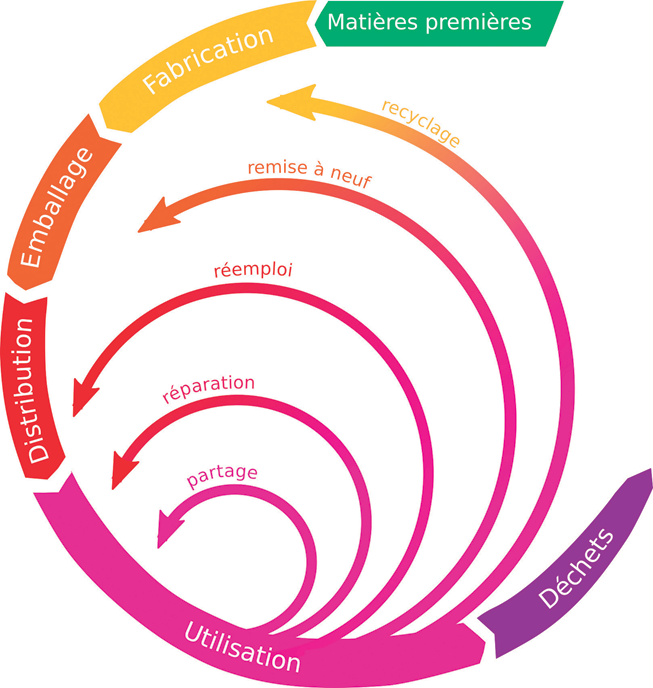
Product life cycle, showing the circular economy
The LUMOMAT (Lumière, Molécules, Matière) university research school (EUR) brings together four laboratories in Angers, Nantes and Rennes: MOLTECH Anjou, CEISAM (Chimie Et Interdisciplinarité, Synthèse, Analyse, Modélisation), IMN (Institut des Matériaux Jean Rouxel de Nantes) and ISCR (Institut des sciences chimiques de Rennes). Using the tools of chemistry to develop molecular materials for organic electronics and photonics, the EUR has defined three areas of research: energy (organic solar cells, dye cells, intermediate gap cells, organic light-emitting diode (OLED), predictive molecular theoretical spectroscopy and modelling), health and the environment (functional surfaces, assembled thin films, immobilised supramolecular assemblies, medical imaging, photodynamic therapy) and information storage (photoluminescent hybrid nanomaterials, photocommutable hybrid nanomaterials, self-organising molecular nanomaterials for photonics). LUMOMAT controls the entire chain: design, synthesis, characterisation and development of the final molecular material. The EUR has already forged industrial partnerships with DS Smith, Armor, Encres Dubuit, Seqens and Heliatek. It can also count on its local partners Angers Technopole, S2E2 (Smart Electricity Cluster) and the WISE Program, which aims to develop projects and academic cooperation on connected objects, smart sensors and smart energy in the Pays de la Loire region.
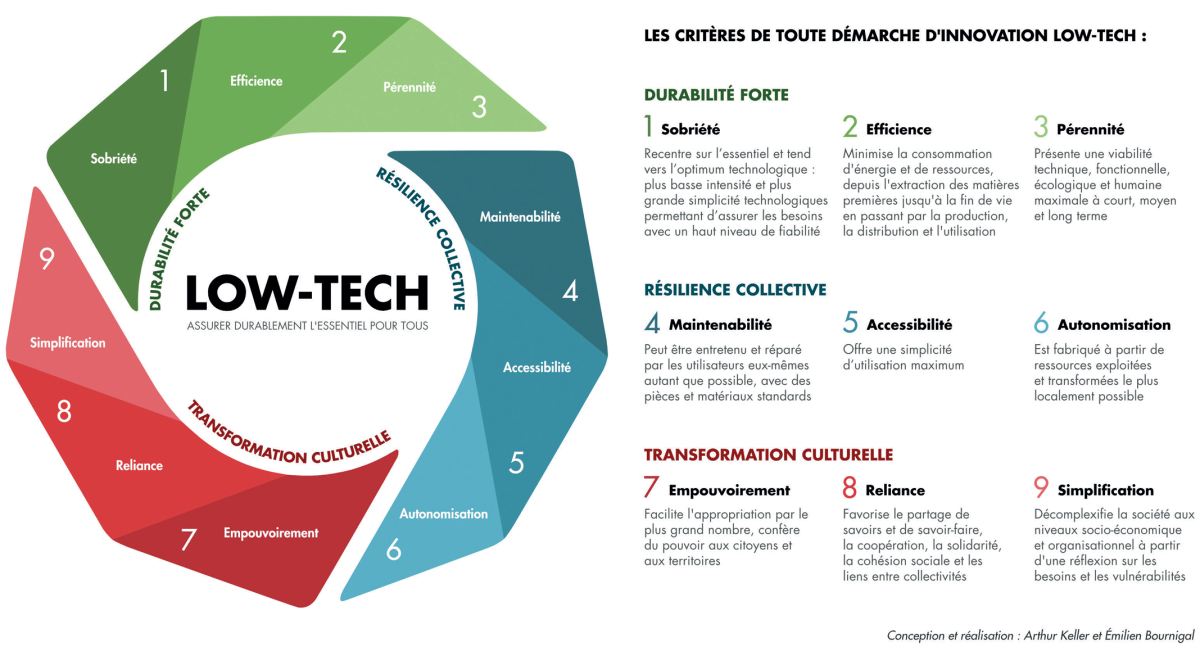
The European Manufacturing Technologies Cluster
This is the other name of the EMC2 competitiveness cluster, based in Bouguenais, Rennes and Le Mans through partnerships with the Institut Maupertuis and ESTACA. With 403 members, 777 supported projects, 426 projects funded to the tune of €1.88 billion and a total R&D budget of €3.03 billion as at 1 January 2023, the cluster is working with start-ups, SMEs, ETIs, major groups and academics towards an eco-responsible industry that produces better, cleaner, connected, together and locally. In June 2020, the EMC2 cluster launched a Manifesto for eco-responsible industry, signed by 80 organisations from the Greater West of France. This manifesto reflects the cluster’s 5 strategic areas of activity: industrial performance, sustainable and low-carbon industry, digital industry, people at the heart of industry, and collaborative, supportive and sovereign industry. EMC2 is also involved in around ten European projects, including ADMANTEX2i in the field of advanced manufacturing and advanced textile materials. The aim is to create durable, globally competitive functional products for a wide range of high-end applications.
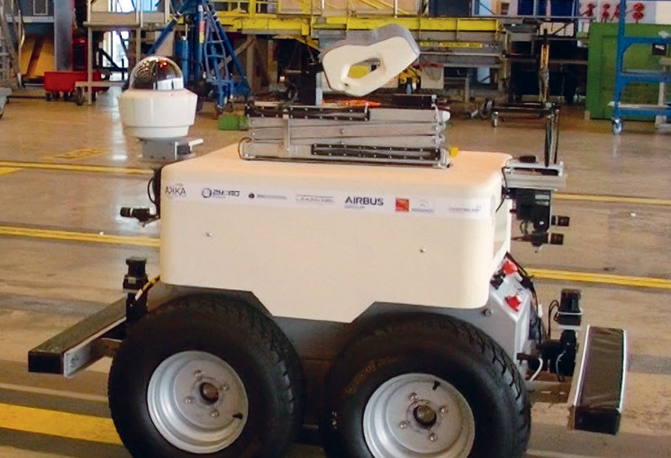
Air-Cobot, a collaborative robot responsible for inspecting aircraft during maintenance operations
Electronics 4.0 and new materials
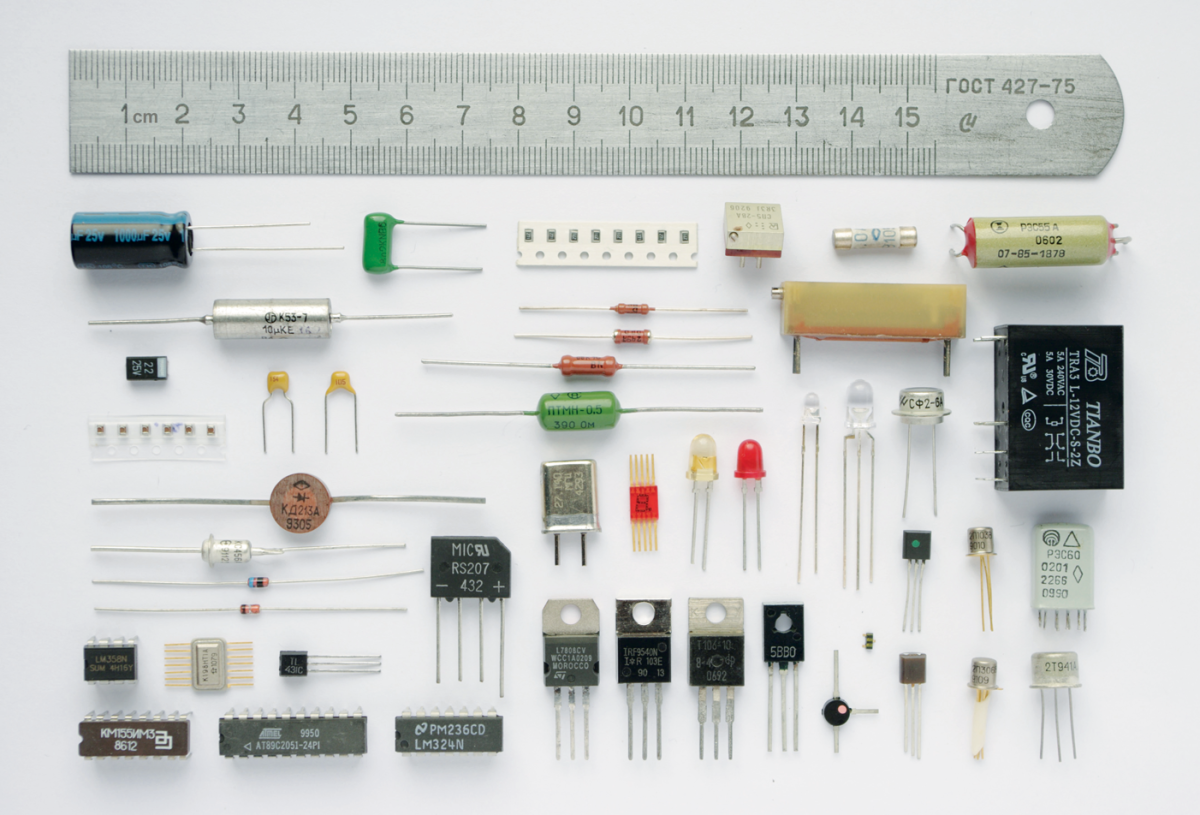
Miscellaneous electronic component
Competitiveness is also in the spotlight at Technocampus Électronique & IoT, a platform based in Angers and focused on accelerating the electronics industry of the future. Supported and financed by the Pays de la Loire Region and Angers Loire Métropole, with the backing of the French government, this cluster brings together 200 electronics industry players from the Grand Ouest region, and its range of innovation, research, training and development services is helping the electronics assembly industry make the transition to 4.0 electronics. For its part, the Institut des molécules et matériaux du Mans (IMMM – CNRS UMR 6283) is developing 4 areas of research (organic synthesis, polymers, organic materials and the physics of confined systems), supported by a wide range of platforms for chemical and structural analysis, surface development and treatment, and electronic and magnetic characterisation. On 2 June 2023, two IMMM researchers received awards from the Fondation d’entreprise Grand Ouest as part of the “Territoire recherche” programme: Anne Boussonnière received the encouragement prize for her “2-MAPSS” project, which is developing new materials to capture and store solar light energy without batteries by incorporating photoactivatable molecules into polymers or hybrid materials; Jean-François Bardeau won the development prize for his “DRIEEM” project (Differentiation, Representation and Rapid Identification of Microorganisms by Excitation-Emission Matrix Analysis), which is developing an optical device to create an “identity card” associated with each micro-organism and to reference it in a database (in collaboration with Jean-Philippe Bouchara, teacher-researcher at the University of Angers and the Angers University Hospital).
Last but not least: the IRT Jules Verne. Based in Bouguenais, by the end of 2021 it recorded 107 R&D projects with a committed budget of €225m, 13 European projects with a committed budget of €5.07m, 134 employees, 61 patents (16 of which were filed in 2021), €20m of investment in equipment and 73 industrial and academic members and partners. This industrial research centre dedicated to manufacturing offers 5 areas of technological expertise (robotics and cobotics, composite materials processes, metallic materials and additive processes, modelling and simulation, process monitoring, inspection and control) and is developing 5 research themes: mobility in the industrial environment, production flexibility, assembly and welding technologies, forming and pre-forming processes and additive manufacturing processes. All for 4 major strategic industrial sectors (aeronautics, automotive, energy, naval), in close collaboration with manufacturers of production equipment and integrators. In May 2023, the IRT Jules Verne, Naval Group, Europe Technologies and Cetim (Technical Centre for Mechanical Industries) launched “SmartRobot”, a feasibility study dedicated to the robotisation of welding for the study of ship frames and ribs. The IRT is also collaborating with Airbus Atlantic, Airbus Opérations, Loiretech and Sense-In on the Hybritech project, which focuses on developing a competitive technology for the manufacture of high-performance composite structural parts for the aerospace industry, against a backdrop of sharply increased production rates and optimised production costs. The results could lead to advances in the wind power, automotive and rail industries. What if the best breakthrough innovations could be recognised by their transferability?
Breton and Loire winners of the second wave of the “First factory” call for projects
Last May, the Government selected 13 new first factory projects for innovative production as part of the France 2030 “First Factory” call for projects, with a budget of €550m for the period 2022-2026. They join the eighteen winners of the first wave. The aim is to help France’s 1,900 industrial start-ups convert their innovative potential into industrial potential.
Néolithe, based in Chalonnes-sur-Loire, was selected for its “PUNEO 2” project, an innovative solution for accelerated fossilisation of final waste for re-use in a circular economy process. With this project, the start-up aims to set up the first fossiliser assembly unit to enable waste to be fully reused, with a carbon footprint of -337 kg of eCO2/tonne of aggregate produced, acting as a carbon sink. The industrial production of aggregates will also help to reduce quarrying and preserve natural resources. The project will ultimately create 200 jobs.
Based in Saint-Malo, 3D-TEX aims to revolutionise textile production by manufacturing automated, seamless 3D knitted products with a zero waste approach. Using state-of-the-art manufacturing equipment, the start-up is recreating skills lost through relocation and creating new jobs as production becomes digital. Setting up a 3D textile production plant will also enable it to position itself as an R&D service provider for technical textiles (automotive, medical, PPE, etc.) and help create a training centre for textile professions in Brittany.
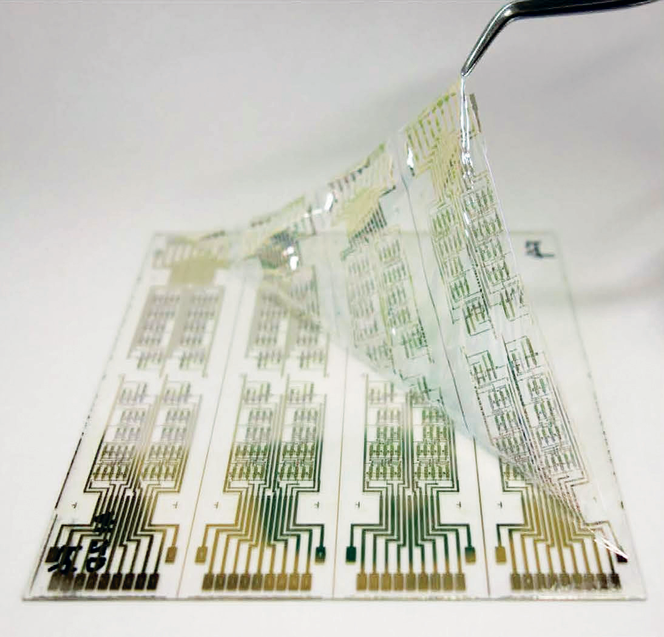
Organic CMOS logic circuit

Originally published in ©Parlementaires de France Magazine, now ©Research Innov France.
