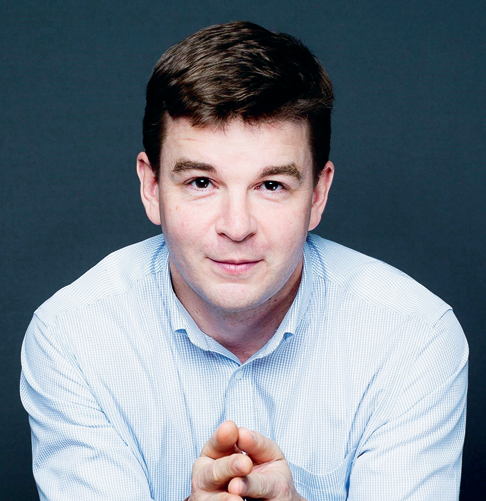
An interview with Prof. Pierre-Antoine GOURRAUD, Nantes University, (CR2TI) INSERM Center for Research in Transplantation and Translational Immunology: Team 3 (iTHINK) & Team 5 (NEMO)
Digital transformation of healthcare for better decision-making
Could you tell us about your threefold activity?
Like all university hospital staff, I do teaching, research and hospital work. As a professor of cell biology and bioinformatics in the Faculty of Medicine at Nantes University, I teach the digital transformation of health and systems biology to 1,200 health students. I also carry out research into the immunology and genetics of transplants and multiple sclerosis (MS): in this capacity, I am the national head of MS genetics. For the past 20 years, I have been working with large databases to develop decision-making tools to resolve immunological problems linked to MS and transplants (kidney, lung, bone marrow). Finally, my work in the hospital has led me to develop a new service within the Nantes University Hospital: the Data Clinic.
Could you tell us more about this Data Clinic?
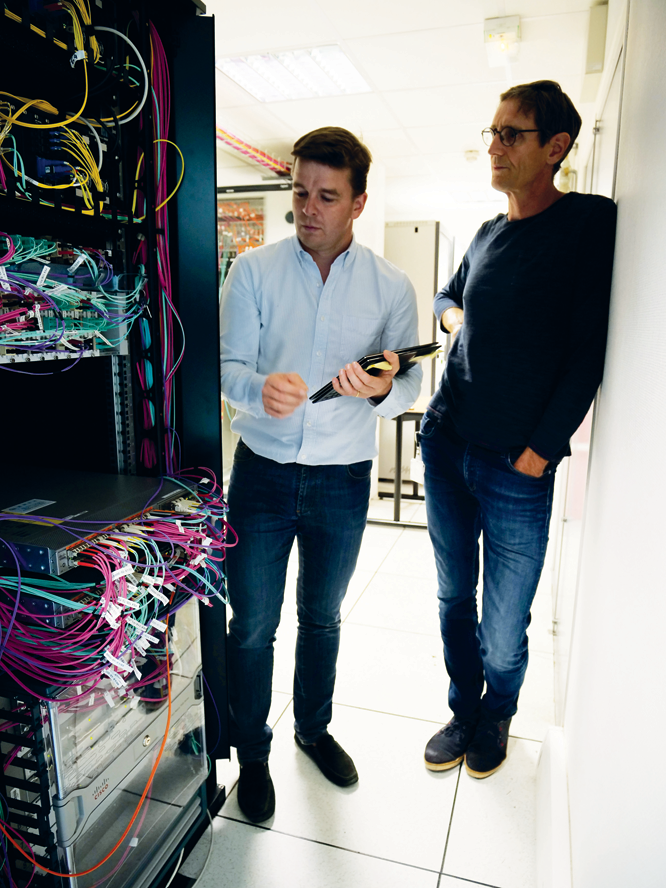
It brings together all the data produced by the healthcare activities administered to 2.1 million patients, i.e. one in three people in the Loire over a 10-year period: 540 million structured data (blood tests, etc.) and 62 million textual data, which is the equivalent of a round trip from Notre-Dame de Paris to La Défense with blocks of A4 paper! The Clinic offers mediated access to the data in order to maintain control over it: a legal imperative, given that it falls within the scope of medical confidentiality.
Could you give us a few examples of current research projects?
I’m involved in the EU-TRAIN project, the scientific co-ordination of which has been entrusted to Prof. Alexandre Loupy, who recently applied molecular analysis to pig kidney xenografts in New York. This project uses massive care and molecular data to make decisions about kidney transplants. In addition, my teams work in a network with their counterparts in the Pays de la Loire, Brittany and Centre-Val de Loire regions within the HUGO group (Hôpitaux Universitaires du Grand Ouest), for which I am scientific co-director of the Ouest Data Hub with Prof. Marc Cuggia: here too, we coordinate the use of data for research and to improve the decisions made for patients. We also support investigators in the use of the SNDS (système national des données de santé), an under-exploited treasure trove of data from 1.3 billion healthcare records, a centralised system on a scale that is unique in the world, offering an exhaustive but medico-administrative view of the national territory. Numerous projects are using this data for a variety of purposes: assessing the consequences of a stay in intensive care on the risk of developing certain cancers or auto-immune diseases, monitoring implantable medical devices over 5 to 6 years through healthcare consumption, etc.
There’s also a curative and educational project of which you’re particularly proud…
MakAir. Developed during the Covid-19 crisis, this unique project has enabled us to create an open source resuscitation ventilator. It has been tested on humans as part of a clinical trial, in collaboration with the Pays de la Loire and Auvergne-Rhône-Alpes regions. It has also been sent to India, Algeria, Morocco and Ukraine at the request of the health authorities. What’s more, this open design model is a major educational asset for secondary school, BTS and IUT students: it’s not every day you get to see a technical-industrial project in action! Toulouse-based DMS Education has also got to grips with the idea, and is now selling the respirators. Today, value creation lies not so much in collective, royalty-free R&D as in the marketing, distribution and maintenance of medical devices.
What do you see as the main challenges in the field of transplantation and immunology?
Information technology invites us, the carers, to be even more human, even more mediators in the face of illness and human suffering. I’d like to see “solidatarity”, the solidarity that comes from sharing data. This is a major challenge if we are to relay financial solidarity through knowledge-based solidarity. Today, we have all the tools we need to guarantee secure data sharing through the use of synthetic data: these simulated data have the same statistical relevance as the original data, but without the risk of patient re-identification. The CNIL has made no mistake about this, assessing the process by which they are developed and issuing a certificate of conformity. In a recent article published in Nature Digital Medicine, I wrote that data repositories were fertile ground for innovation: creating economic value from data is perfectly legitimate as long as it is not done at the expense of privacy. All that remains is to convince parliamentarians to pass a law to make synthetic data the new standard for data exchange in France, Europe and the rest of the world.
Originally published in ©Parlementaires de France Magazine, now ©Research Innov France.
