
In the Hauts-de-France region, the ESRI landscape is structured around three federating groups of higher education establishments: the Université de Lille, the Université Polytechnique des Hauts-de-France (UPHF) and the A2U alliance (Artois, ULCO, UPJV), all of which are multi-site.
Academic and scientific potential: diversity and interdisciplinarity in Hauts-de-France
With 145 research units, 11 doctoral schools, 10 research organizations, 11,390 researchers (2020) and 3,380 PhDs/year (2019), the Hauts-de-France region is heavily involved in healthcare and agri-resources. Medical research enjoys international visibility in reconstructive surgery (with the Faire Faces institute, where the first face transplant was performed) and diabetes. Research in the field of mathematics and computing is also distinguished by the presence of renowned laboratories and research infrastructures.1
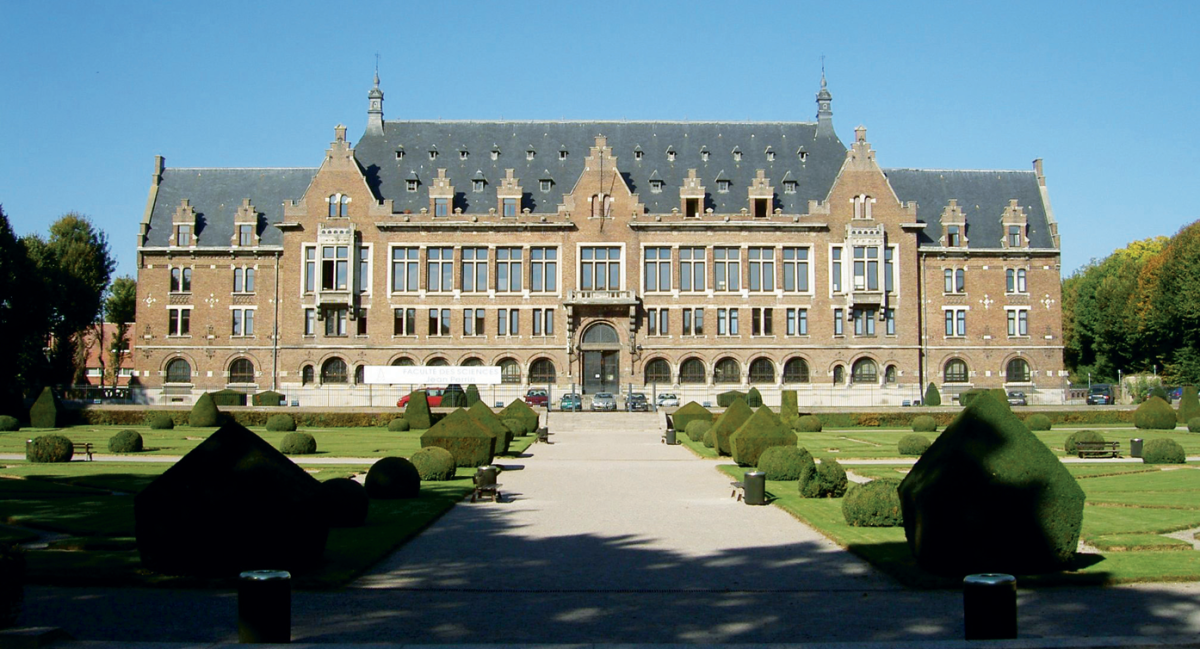
Grands Bureaux de la Compagnie des mines de Lens, now the Jean Perrin Faculty of Science (Université d’Artois)
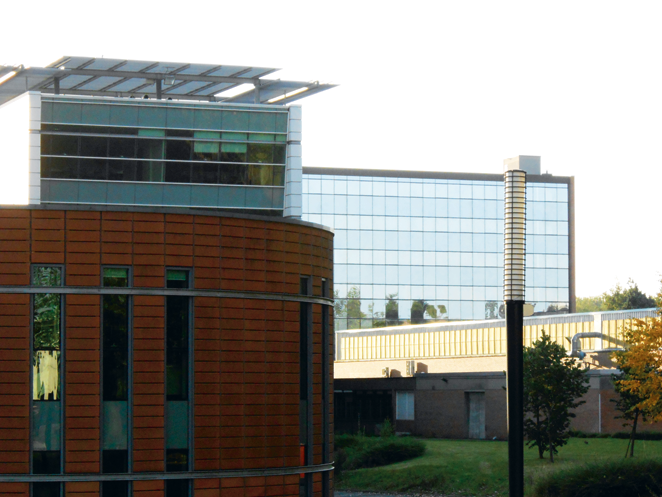
University of Lille Science City
At the University of Lille, major transitions are tackled through four interdisciplinary research and training hubs: digital for people, precision health, science for a changing planet, and changing cultures, societies and practices, complemented by new themes such as social inclusivity, ultra-fast communications, cancer therapies, AI for health and innovative textiles. With 4 laboratories of excellence or Labex (Egid – European Diabetes Genomics Institute, Distalz – Development of innovative strategies for a transdisciplinary approach to Alzheimer’s disease, CaPPA – Physics and Chemistry of the Atmosphere, CEMPI – European Center for Mathematics, physics and their interactions), the University of Lille is supporting numerous projects in the CPER 2021-2027, including ARIANES (Association for Research and Advanced Imaging in Neuroscience and Mental Health), ECRIN (Environment Climate – Research & Innovation), EE 4.0 (Electrical Energy 4.0) and ENHANCE (Embedding a Human Dimension in Cultural Heritage).2
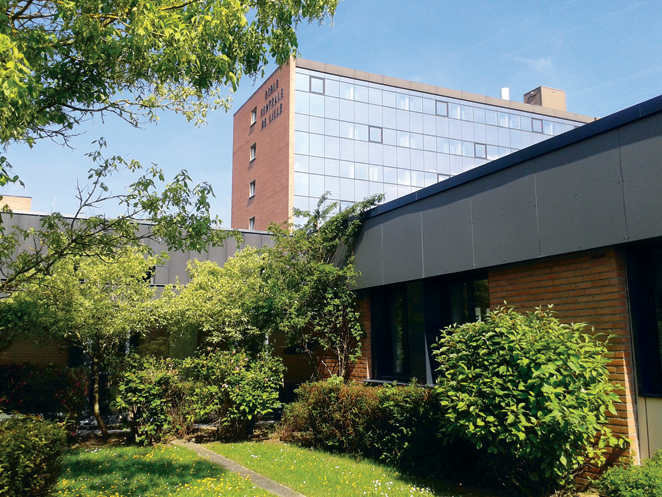
Tower of the École centrale de Lille
UPHF is equally dynamic: its research, spread across 4 major laboratories (CERAMATHS, IEMN, LAMIH, LARSH), is structured around 3 strategic hubs: Health and Care of the Future; City, Mobility and Territory of the Future; Industry of the Future, Eco-responsible Materials and Associated Processes3 (see dedicated article). For their part, A2U’s three universities are multipolar and multidisciplinary. They bring together over 50,000 students, 15 sites, 2,750 teaching staff, 1,000 PhD students, 52,000 students, 7 research priorities (artificial intelligence and optimization; energy; sea and coast; environment and natural resources; health; societal adaptation to change; cultures, territories & heritage) and 67 research units. A2U is distinguished by 9 projects shared by the three universities, including the CPER project “Anamorphose: le patrimoine sous le territoire, le territoire sous le patrimoine” (the heritage under the territory, the territory under the heritage), IFSEA (Transdisciplinary graduate school for marIne, Fisheries and SEAfood sciences) and MAIA (Mastering Artificial Intelligence Applications for Health, Chemistry (materials, energy) and the Environment/Sea).4
Many other establishments support regional research: the Université de Technologie de Compiègne (UTC, with 8 laboratories and a doctoral school)5, the Université Catholique de Lille (UCL, with 850 teacher-researchers and hospital researchers, 220 doctoral students, 12 research units and institutes and four strategic thematic areas, i.e. vulnerabilities, ethics and integral ecology, risks and geopolitics, contemporary preservations and transformations, notably digital)6, as well as the Grandes Écoles (Centrale Lille – digital, energy, environment, health, ENSAM – fluid mechanics, electrical engineering, collaborative robotics, tribology and surface treatment, IMT Nord Europe – digital systems, materials and processes, energy and environment, UniLaSalle – agroecology and bioeconomy, new energies, circular economy and cities of the future, food science and health, ICAM – energy production, storage and management, innovative structures and materials, societal and technological transition of companies, POLYTECH Lille – with 15 associated multidisciplinary research laboratories), the regional branches of major research organizations (CNRS, ADEME, Inria, CEA Tech, Ifremer, INRAE, Inserm, ONERA)… A tightly woven network of skills to enhance the attractiveness of the Hauts-de-France region.
Academic and scientific potential: diversity and interdisciplinarity in Hauts-de-France
In Hauts-de-France, the ESRI landscape has been structured around three unifying higher education groupings: the University of Lille, the Université Polytechnique des Hauts-de-France (UPHF) and the A2U alliance (Artois, ULCO, UPJV), all of which are multi-site.
1 Source: Ministry of Higher Education and Research: “Hauts-de-France. Innovation and research ecosystem”, May 2024.
2 Source: University of Lille https://www.univ-lille.fr/recherche
3 Source: UPHF, “Research strategy” https://www.uphf.fr/recherche/recherche-luphf/strategie-recherche
4 Source: A2U https://a2u.fr/
5 Source: UTC https://www.utc.fr/
6 Source: UCL https://www.univ-catholille.fr/presentation-de-la-recherche

Originally published in ©Parlementaires de France Magazine, now ©Research Innov France.
