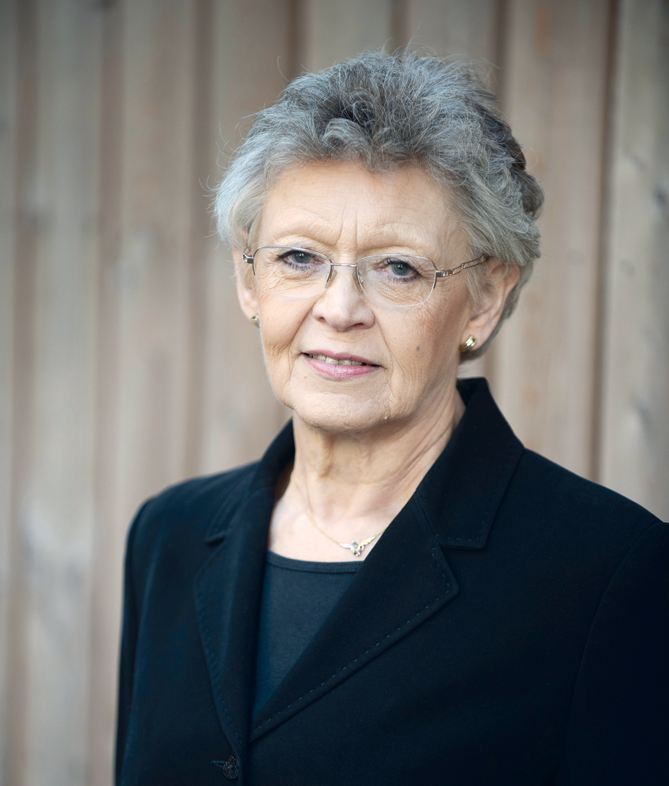
An interview with Prof. Françoise BARRÉ-SINOUSSI, Nobel Prize in Physiology or Medicine 2008, Member of the Academy of Sciences in France and the Academy of Medicine in the United States, Honorary President of the International Network of Pasteur Institutes, President of Sidaction
The political decision must be based on scientific evidence
How would you sum up your work as head of the Committee for Analysis, Research and Expertise (CARE), which advised the government on coronavirus treatment and testing?
CARE was set up on March 24 2020 by the President of the Republic under the dual supervision of the Ministries of Research and Health, and operated until July 10 on the basis of two missions. The first consisted of giving opinions on research projects to be supported financially as a matter of urgency. In total, the committee issued 210 opinions on the more than 500 projects submitted, and some 20 projects were funded.
These included the creation of an epidemiological observatory in wastewater (OBEPINE) to monitor the presence of SARS-COV-2 at national level, and three vaccine candidates recommended in conjunction with the REACTing vaccine committee (those of the Institut Pasteur in Lille, the Vaccine Research Institute in Créteil and the CEA) in addition to the candidate developed by the Institut Pasteur in Paris.
As part of its second mission, CARE wrote 19 notes, including one on vaccination strategy in collaboration with the Scientific Council. Overall we had excellent interactions with the Scientific Council, REACTing and the Ministry of Research. The same cannot be said of the inter-ministerial crisis units and the Ministry of Health. I also regret the lack of representation of civil society within our committee and beyond, as it is, in my opinion, partly responsible for the public’s mistrust of government decisions.
What is the current state of knowledge on SARS-COV-2?
Its genetic material is already very well known and its mutations are being closely monitored. It is a worrying infection, but much has been learned about its modes of transmission, particularly through aerosols. We have also made important discoveries about super transmitters, children (low carriers and transmitters), herd immunity and the impact of the inflammation caused by this virus on the severity of the disease (with the adaptation of treatments such as dexamethasone to improve survival). We have also very quickly made enormous progress on molecular (PCR) and serological screening tests. That said, our scientific knowledge must continue to evolve, and political decisions must continue to be based on scientific evidence.
What unknowns remain to be solved?
CARE has published a prospective note on the main orientations to be prioritised: the transmission mechanisms, the impact of genetics and immunity on the response to infection, the study of mechanisms responsible for post-COVID complications, and mental health. We also need to strengthen the diagnostic testing sector with operational regional platforms and reinforce the vaccine sector via support for fundamental research in immunology and R&D. Finally, we must improve transparency in health data management and promote research on zoonoses; such research could be carried out by a new agency merging REACTing and the ANRS.
Have you seen any similarities between HIV and COVID-19?
Yes and no! Both are emerging infectious diseases with only partial initial knowledge of their transmission. Both have complications related to infection-induced inflammation, and thus some similarities in pathogenesis. Both affect the most vulnerable and precarious people. Finally, both have aroused fear and given rise to prophylactic recommendations that have met with opposition in civil society. The lessons of HIV encourage the involvement of associations in political decisions. That said, the differences remain: an acute and deadly infection for the elderly in the case of SARS-COV-2, versus a chronic infection that is lethal for HIV in people without antiretroviral treatment.
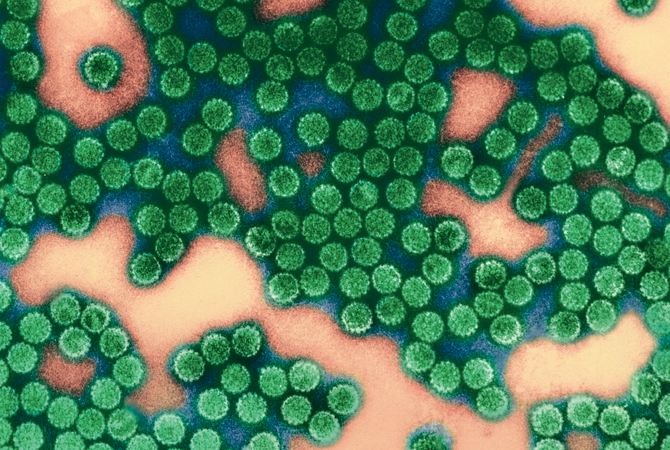
Papillomavirus
What do you see as the main challenges in SARS-COV-2 research?
The challenge is to find a specific treatment. The discovery of new drugs will come from fundamental research to deepen knowledge of the virus’ replication cycle and to identify new molecules through structural biology and modelling.
About 100 vaccine candidates are in clinical development and several with proven efficacy are licensed in Europe. However, vaccine research needs to continue in order to better understand the mechanisms of protection and to adapt vaccines to the evolution of the virus. Finally, the back-and-forth between fundamental and clinical research will have to include the human and social sciences to better understand the expectations of the population and gain its support for future preventive measures.
Originally published in ©Parlementaires de France Magazine, now ©Research Innov France.
