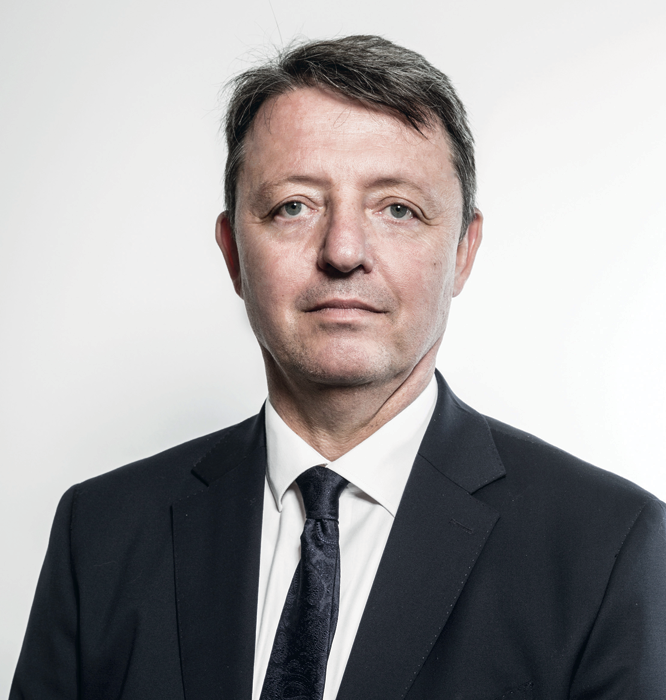
An interview with Mr Philippe LAMOUREUX, Managing Director of Leem (Les Entreprises du Médicament)
Supporting therapeutic innovations and the reorganisation of the health system
What are Leem’s missions?
Leem is the representative professional organisation of the pharmaceutical companies operating in France. It brings together 260 member companies employing 100,000 people, i.e. almost 3% of industrial employment in France. Leem’s missions are many and varied. The first is to defend the interests of its members and, more broadly, to promote ecosystems favourable to the development of innovation, relocation and the establishment of industrial activities in order to support employment and make all treatments, whether mature or innovative medicines, available to patients.
The Leem also has the task of negotiating, with the State, the conventional policy of setting and regulating the prices of medicines in France. Finally, as a professional organisation, Leem is mandated to negotiate the social policy of the sector.
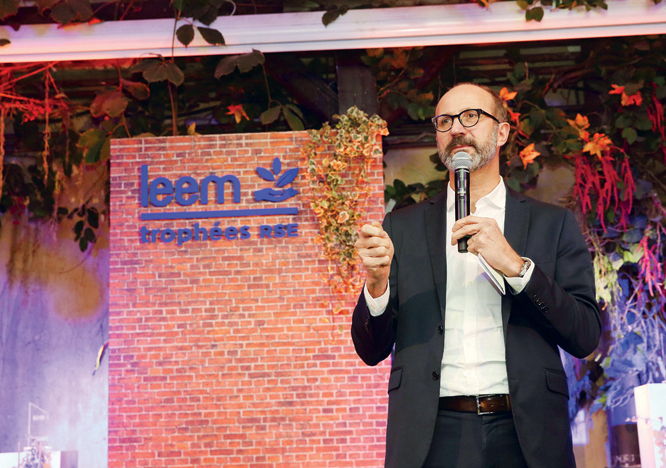
Frédéric Collet, President of Leem at the presentation of the CSR Trophies
In your opinion, what are the major processes at work in the pharmaceutical industry?
We are witnessing an unprecedented therapeutic revolution driven by three major trends: the shift from chemistry to life sciences with biotechnologies opening the door to more effective personalised medicine, the combination of different technologies (genomics, AI, data, digital twinning, etc.) to complement drugs, and the evolution of the product (drug) towards service (optimisation of its administration via compliance platforms and therapeutic education).
Classic frameworks are exploding. In vivo monitoring of patients benefiting from niche products will complement clinical trials. We are gradually moving towards conditional evaluation mechanisms that take into account the presumption of performance (healing). The health system will have to adapt to capture the savings generated by innovative treatments (gene therapies for haemophilia, treatment of hepatitis C, etc.), which are very efficient but often expensive, in order to better finance them.
How does Leem contribute to health innovation?
Leem provides politicians with information on current developments (financial impact and opportunities for transforming the healthcare system) as well as information on France’s competitive position in terms of clinical trials. France must maintain its leadership in oncology and orphan diseases while catching up on metabolic diseases. This means, in particular, shortening the authorisation deadlines of the personal protection committees.
More generally, Leem advocates a clear, predictable and stable drug policy that is conducive to attractiveness and capable of strengthening the ability of French subsidiaries to defend research in France. Finally, it will be necessary to reduce the time of access to the market (waiting time between the granting of the marketing authorisation and the setting of the price): it is 566 days in France compared to 127 days in Germany!
How do you view conflicts of interest?
First of all, let’s recall the difference between links of interest, which are essential for the development of new medicines with health professionals, and conflicts of interest, which are undeclared links of interest in the context of decision-making. Since the laws of 1993 and 2016, France now has the most stringent regulations in the world. Leem has also set up an independent ethics committee, the Codeem. However, beware of the confusion between links and conflicts of interest, which has led to a weakening of expertise in the public sphere and which is leading to a dropout from France.
What R&D strategy have you defined for rare diseases, infectious diseases and cancer?
Together with our member companies, we are investing heavily in gene and cell therapies, which are driving innovation in the fields of cancer and rare diseases, with increasingly personalised treatments stemming from translational research. Major innovations are expected in the treatment of haemophilia, sickle cell disease, multiple myeloma, etc.
Polytherapies combining several molecules are giving rise to great hope in oncology. Zoonoses are generating increased research work, as is the fight against antibiotic resistance, which involves sharing the risk between public authorities and industry. Ultimately, these new therapeutic prospects will have to go hand in hand with the reorganisation of the health system towards greater efficiency.
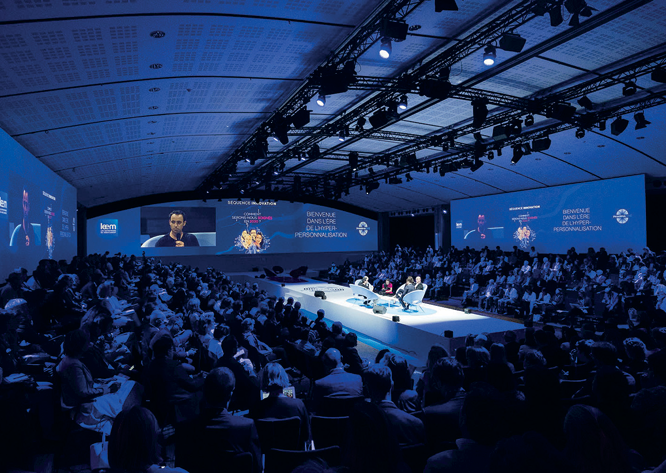
Philippe Lamoureux at the “Health 2030” press conference
Originally published in ©Parlementaires de France Magazine, now ©Research Innov France.
