
An interview with Prof. Bernard DEVAUCHELLE, President of the Association Institut Faire Faces
A research centre devoted to disfigurement
What are the key figures and founding members of the Institut Faire Faces (IFF)?
More than key figures, it is a key date that gave rise to the desire to create a research institute devoted to disfigurement: it was November 2005, the date on which we were able to carry out the first face allotransplantation. Inspired by the IRCAD model, supported by the management of our university hospital in Amiens and by the University, as well as by the European Association for Cranio-Maxillo-Facial Surgery, the IFF was thus created, encouraged to respond to the investments of the future programme (PIA) from which it benefited in 2011 in the form of the EQUIPEX project entitled “Figures”. At the same time, the Regional Council, backed by European FEDER funds, invested in the construction of a dedicated building which should open in the spring of 2022.
At the same time, a research team entitled “CHIMERE” (surgery, imaging, regeneration) was accredited in 2018. Finally, a Scientific Cooperation Foundation is being set up, supported by ten players including the Hauts-de-France Region, Amiens metropolis, the UPJV (University of Picardy Jules Verne), the Amiens-Picardy University Hospital, the Compiègne University of Technology (UTC), the CEA List, the Brothier laboratories as well as a few scientific companies.
Research areas of the Institut Faire Faces
Could you present the different research areas of the Institut Faire Faces?
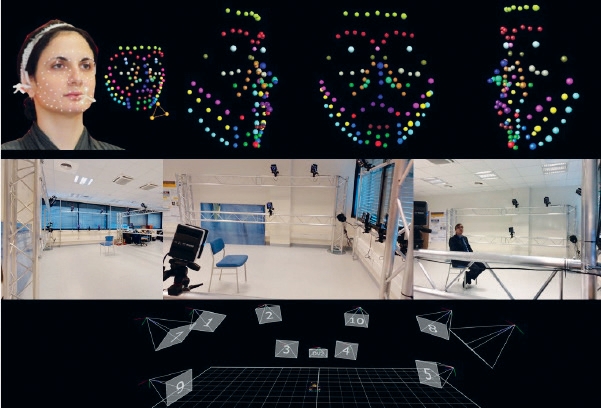
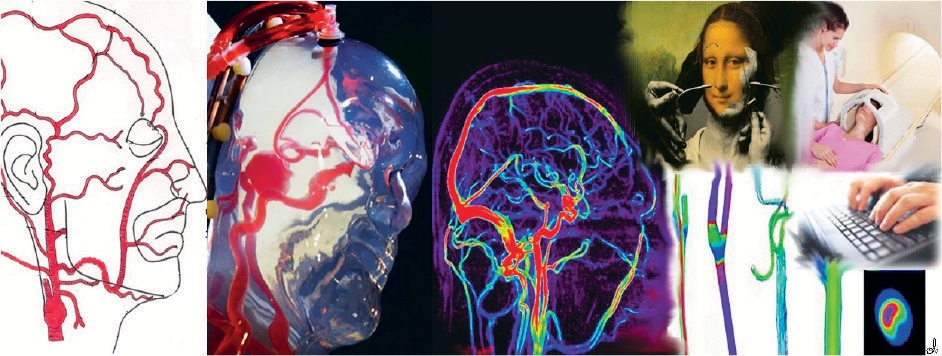
The Institut Faire Faces is above all a place, a platform devoted to research. The MRI we have, operated in collaboration with Philips, focuses on flow MRI, spectroscopy, elasto-MRI, etc. The EQUIPEX has enabled us to create a unique platform in Europe for analysing facial movements. These twelve cameras make it possible to check the recovery of facial mimicry muscles in people suffering from paralysis or having undergone a facial transplant.
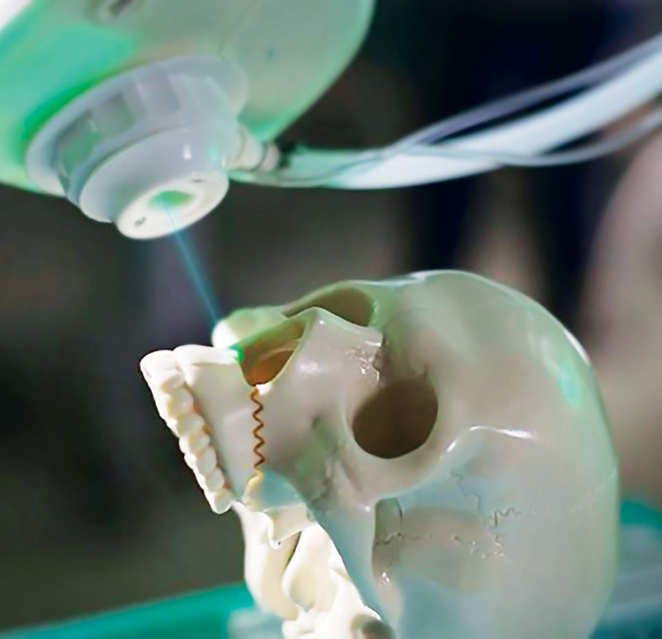
We are also working on eye-tracking (analysis of the eye’s micromovements), surgical robotics (development with the University of Basel of a robot for automated bone cutting with a laser), and learning the haptic dimension of the surgical gesture (as part of a collaboration with the CEA-List). This line of research is part of the wider GRECO framework supported by the UPJV. Our team is involved in the engineering of bone tissue with applications in the treatment of cleft lip and palate and, following a collaboration with the University of Technology of Compiègne, we are working on the development of a medical device for nerve regeneration from electrospun silk threads (alternative to autograft).
For a long time now, we have also been collaborating with teacher-researchers in the humanities and social sciences (philosophers, epistemologists, sociologists, historians, etc.), whose reflections have nourished the question of disfiguration.
The new research centre on disfigurement
Could you tell us about the new research centre on disfigurement?
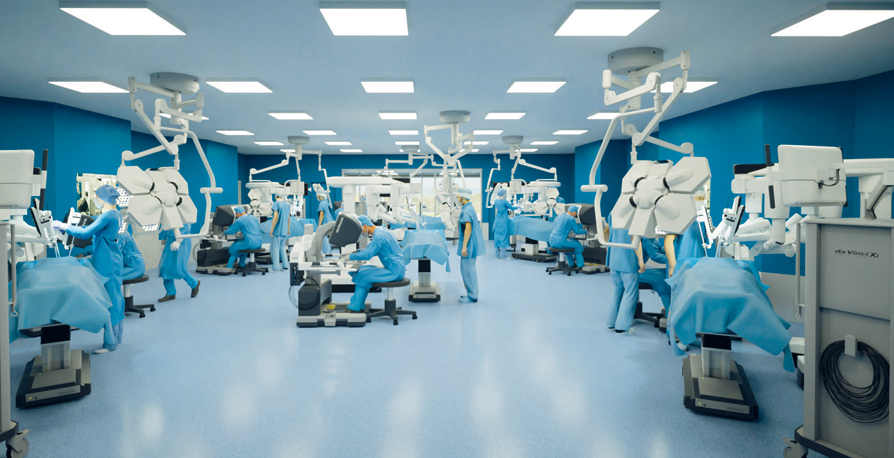
This centre, the result of ten years of work, is unique in Europe. It is intended to be attractive to researchers who want to get involved in the various themes. In parallel with this research activity, the centre is also intended to be a training centre: it will have an experimental surgical unit dedicated to medium-sized animals and will be part of a dynamic partnership with SIMUSANTE, another player awarded the IDEFI label under this same PIA and dedicated to learning by simulation. Finally, the centre’s third vocation is to educate the public and cultivate tolerance and respect for people with facial disabilities. In this respect, campaigns are carried out as well as collaborations with patient associations.
Challenges and perspectives
What do you see as the main research challenges in your field of expertise?
How can we reconcile progress in the field of technology with the constraints imposed by the biological dimension of the human body? This is the question of tolerance, which is linked to the other question of tolerance in the context of transplantation. There are also medical devices developed to restore nerve function: to be able to improve the recovery of a destroyed biological function (grafting “an emotion”).
Over time, facial surgery has been given new qualifications: from ablative, it has become reconstructive and transplant surgery will be followed by regenerative surgery. This is the challenge for the years to come.
Originally published in ©Parlementaires de France Magazine, now ©Research Innov France.
