
Recognised expertise on aerosols and their precursors. An interview with Prof. Denis PETITPREZ, Scientific and Technical Manager of Labex CaPPA
Labex CaPPA – Physics and Chemistry of the atmosphere
Could you present the players and expertise of the Labex CaPPA?
The Labex is made up of 7 laboratories spread over 3 sites: 4 mixed CNRS-University of Lille research units and a research support unit in Villeneuve-d’Ascq, an IMT Nord Europe laboratory in Douai and an ULCO laboratory in Dunkirk. It has 160 permanent staff and 60 theses in progress, (co-)funded by the ANR and the Labex partners: University of Lille, ULCO, IMT NE, the Hauts-de-France Region, ADEME and CNES.
The Labex studies atmospheric aerosol particles: shape, size, interaction with light and cycle (formation, emission, transformations during transport and deposition). It combines a double expertise in physics and chemistry in order to better understand the health and climatic impact of these aerosols, whether they are of natural or anthropogenic origin, emitted locally or resulting from the long-distance transport of air masses.
What are your research areas?
Organised into 6 working groups, we have structured our methodology around 3 poles:
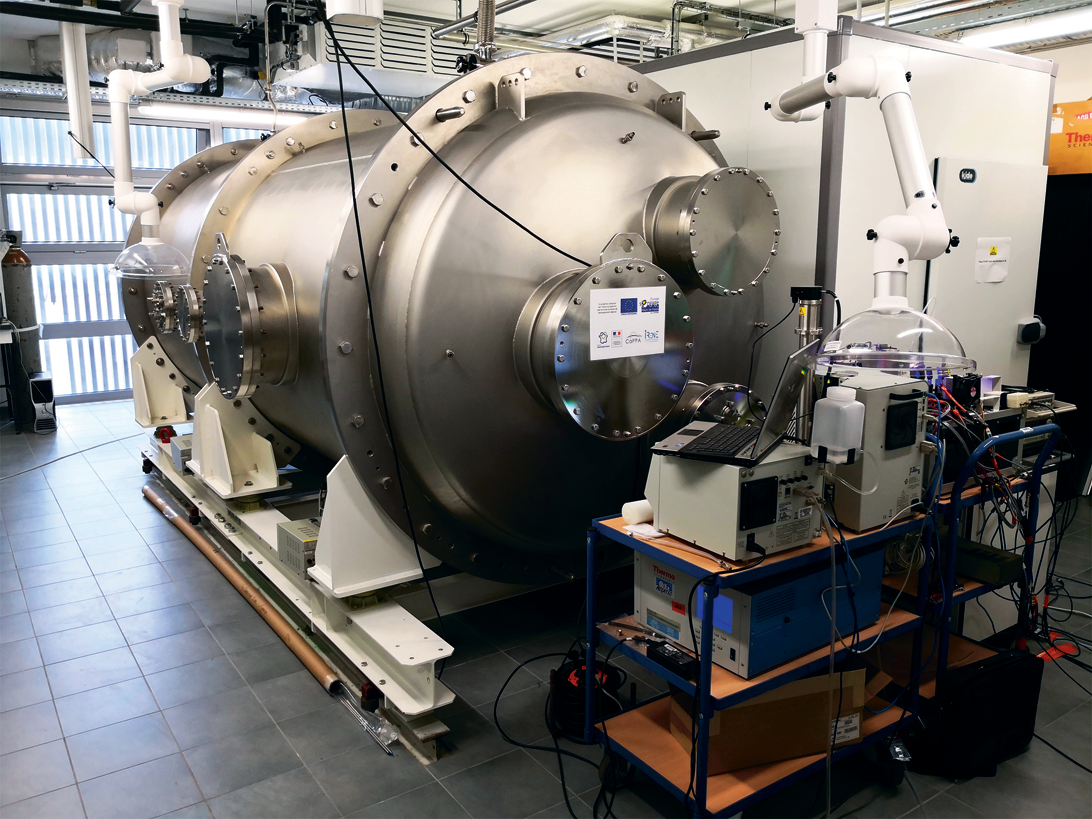
Laboratory study of fundamental atmospheric processes using state-of-the-art scientific equipment.
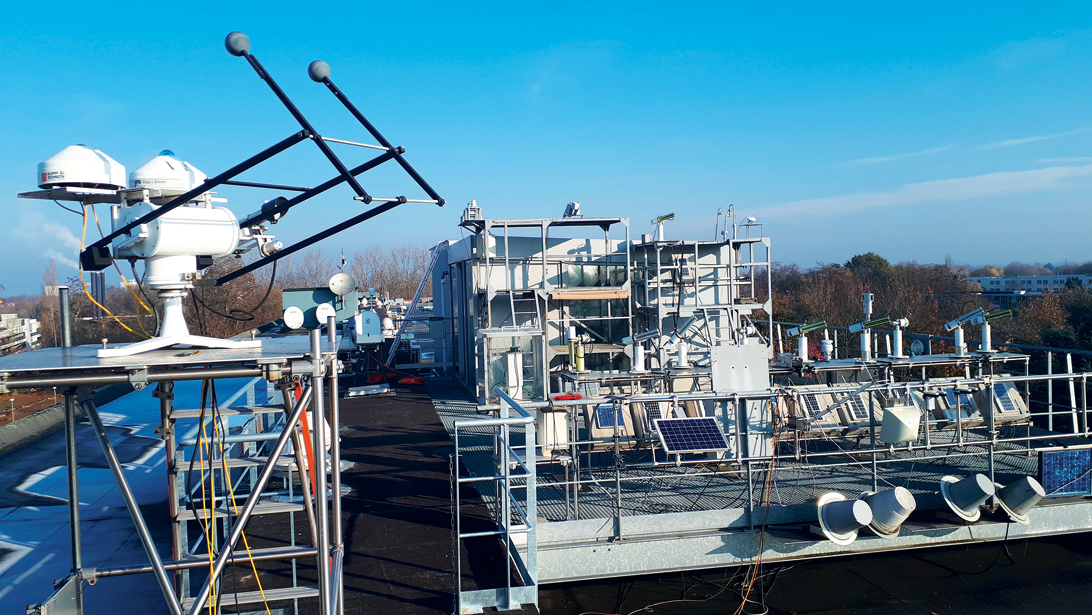
Real observation of the atmosphere on a continuous basis using instrumentation based on the ground or embarked on aircraft, balloons or satellites to study specific events.
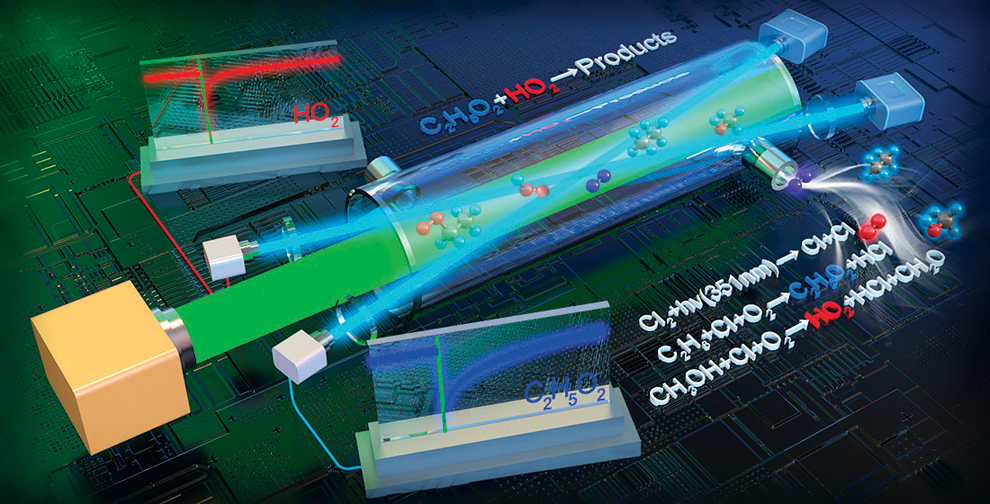
Atmospheric modelling for the development of predictive models and molecular modelling to simulate and understand the interactions between particles and surrounding gases on the nanometric scale.
What is your contribution to the regional and national economy?
The Labex works with start-ups specialising in air quality sensors and supported the launch of Grasp-SAS (predictive emission models). Another example is Agora Lab, a joint laboratory with Cimel, which developed lidars to detect aerosols between 0 and 10 km in altitude.
The Labex is also in contact with Envea to develop instruments for measuring soot particles and NOx emissions. Furthermore, all real-time atmospheric observations are hosted by the ICARE unit and integrated into the European infrastructure ACTRIS. Finally, the “Atmospheric sciences” master’s degree, launched in 2013, offers training of excellence through research in the Hauts-de-France region.
What do you see as the main challenges in your field of expertise?
One of our goals is to retrieve the size, chemical composition and concentration of aerosol particles in the atmosphere. Technological challenges include developing instrumentation to continuously measure particles between 1 and 10 nanometres. In the context of the ecological transition, we must anticipate new pollutants from decarbonised energy processes (such as electric vehicles). Finally, we need to achieve a spatial resolution at the street level to estimate the impact of urban development projects (micro-forests, pedestrian zones) on air quality.
Labex CaPPA
PC2A Laboratory UMR8522 CNRS/ULille
Bldg. C11 – Cité Scientifique
F-59655 Villeneuve d’Ascq
Tel. : +33 (0)3 20 43 65 62
https://www.labex-cappa.fr/
Originally published in ©Parlementaires de France Magazine, now ©Research Innov France.
