
The aeronautics and space sector is the leading industry in Occitanie / Pyrénées-Méditerranée with more than 1,000 suppliers, subcontractors, design offices and 98,000 jobs. Toulouse is home to the world headquarters of Airbus Group and the headquarters of the Aerospace Valley competitiveness cluster. In addition, the region is France’s leading centre for higher education and research in aeronautics, with three-quarters of French engineers trained here. Here is a brief overview of the main players.
Aeronautics and space: a vector of industrial excellence for Occitania
Aerospace means Airbus. Committed to being a pioneer of sustainable aerospace, the group is dedicated to leading the decarbonisation of the aerospace sector by developing new technologies. To this end, it aims to deliver the world’s first zero-emission aircraft by 2035, paving the way for climate-neutral travel. At the same time, its advances in urban air mobility will offer cleaner options for a faster and more reliable mobility solution in urban areas: a service touted as safe, green and convenient that harnesses the airspace above our heads.
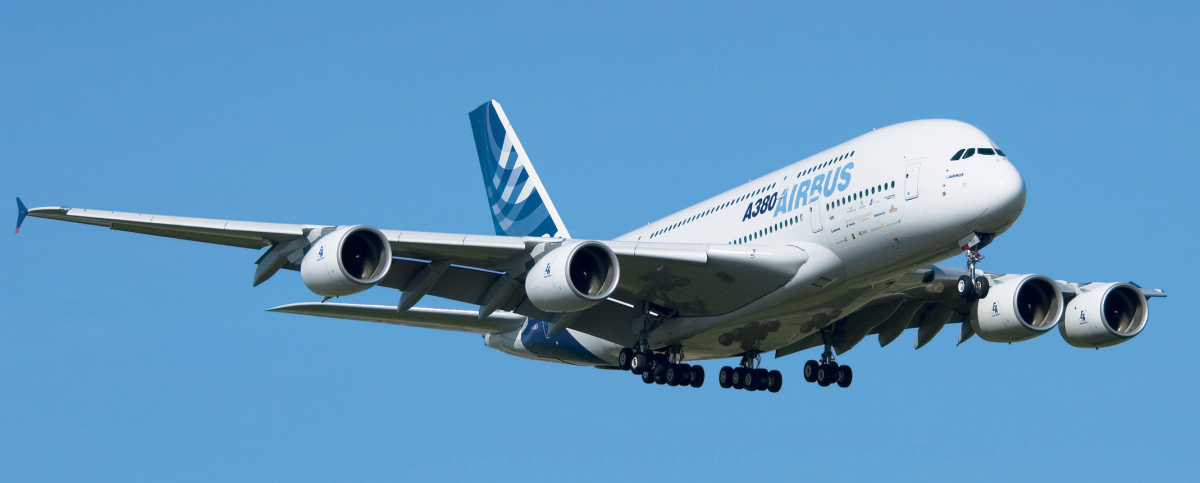
A380 in Toulouse
Similarly, Airbus’ space technologies enable mankind to send spacecraft to planets, moons and comets, both close to our sun and millions of kilometres away. In turn, its satellite imaging solutions continue to expand human knowledge of our universe, from the ability to capture critical events on Earth to providing the solutions that enable deep space exploration. While Airbus is at the forefront of the regional ecosystem, following the example of Safran, Thales and Liebherr-Aerospace Toulouse, it is nonetheless supported by a whole network of local SMEs and ETIs (Steel Electronique, Mecano-ID, Comat, Erems, etc.).
Cutting-edge research
With 6,271 million euros dedicated to domestic R&D expenditure (i.e. 12.3% of domestic R&D expenditure in mainland France), which corresponds to 3.6% of its GDP, Occitania ranks first among French regions in terms of research efforts. 49,679 people in full-time equivalent were paid for R&D activities in Occitania in 2018, which corresponds to 11.2% of the R&D workforce in mainland France.
Faced with the major global challenges of digital and environmental transformation, the strengthening of industrial competitiveness and the development of disruptive products require partnership research activities between industry and public research players. This is the challenge of the IRT Saint Exupéry, which aims to accelerate the transfer of academic research to industry, from start-ups to large groups, for the aeronautics, space and embedded systems sectors. Committed to the electrification of aircraft, it has set itself 4 technological axes: intelligent technologies, methods and tools for the development of complex systems, greener technologies and advanced manufacturing technologies.
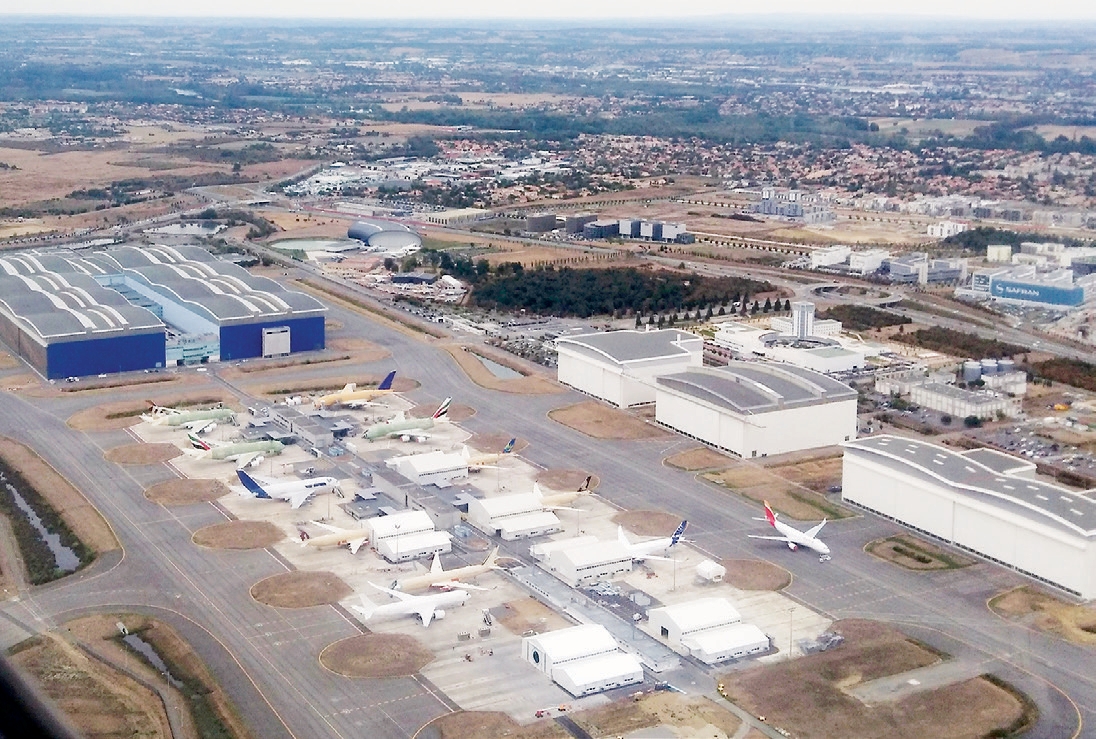
Aerial view of the Airbus Lagardère plant
IRT Saint Exupéry offers three types of research projects: “internal” projects responding to shared industrial needs, collaborative projects in response to regional or European calls, and subcontracted research projects (POC, feasibility studies, testing).
As an example, IRT Saint Exupéry is supporting MAMA, a project launched in 2018 with a budget of €10.4M that aims to achieve a 30% saving in raw materials for titanium aerostructure parts. This multidisciplinary project is a perfect example of the need to bring together all regional skills, represented by players such as CNES, Météo-France or Aerospace Valley, the leading European competitiveness cluster in the aerospace sector with 861 members and over 1,000 accredited projects.
Occitania, the runway for future green aircraft
In June 2022, the Region adopted a Green Aircraft Plan which mobilises and supports the industrial and academic skills of Occitania to accelerate the decarbonisation of air transport. Several levers will make it possible to achieve this result: alternative fuels (53% of the effort required), technological developments (34%), optimisation of flight and ground operations (7%) and compensation measures (6%).
Firstly, a test centre focused on the development of new hydrogen technologies and sustainable fuels will be created at Francazal. This technocampus will serve the development not only of future hydrogen-powered aircraft, but also of buses and trucks. A unique concentration of skills in France, it will be the largest in Europe and will cover 10,000 m². At the same time, the Region will support the development of sustainable aviation fuels through calls for expressions of interest and will increase its support for the development of sustainable light aviation.
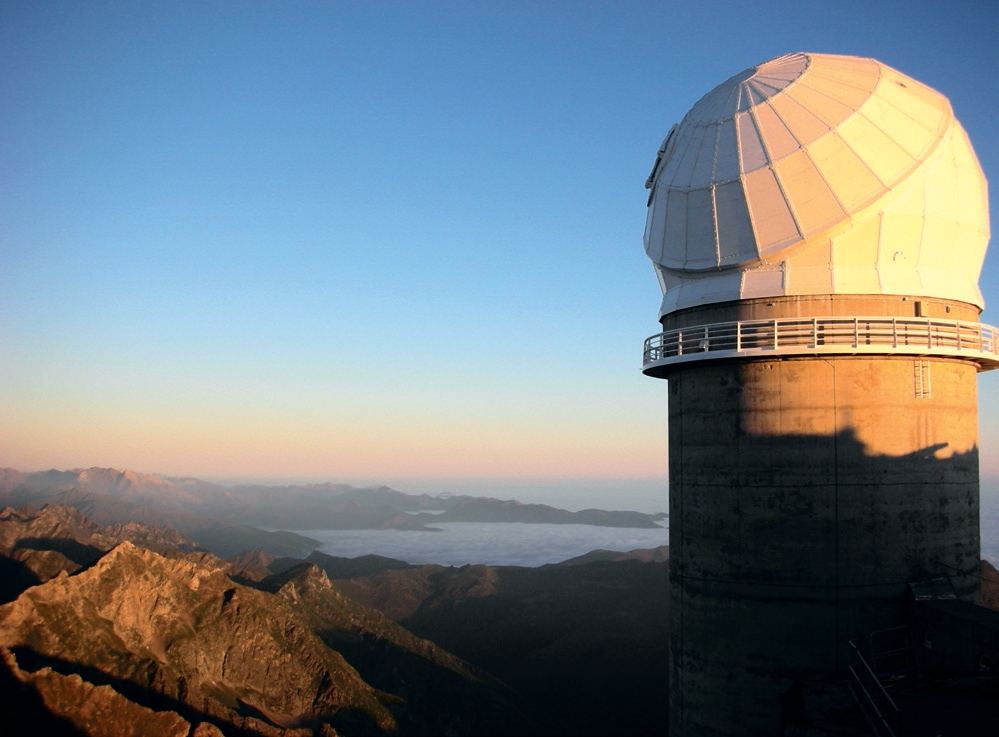
The Bernard Lyot telescope (Pic du Midi Observatory) at sunrise
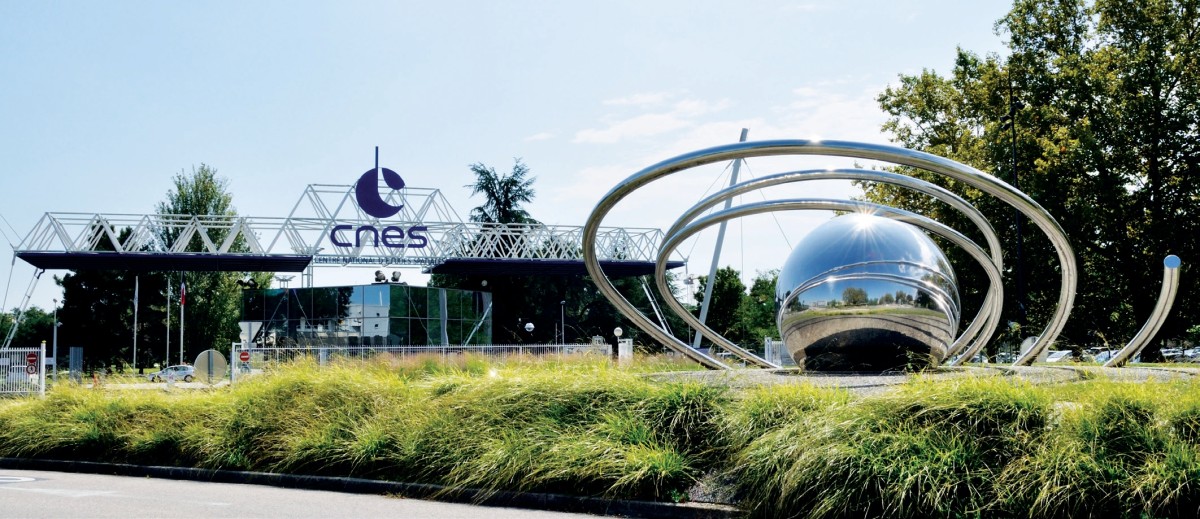
Entrance to the Toulouse Space Centre
Emphasis will also be placed on the renewal of skills, new professions and the attractiveness of the sector. The Occitanie Region, which is already behind the GENHYO project for the creation of a Hydrogen Campus, will also support the training of employees in the sector. Finally, the innovation efforts of regional companies, focused on green aviation, will be supported, as will the project to create a Sustainable Aviation Institute, led by ISAE SUPAERO in Toulouse. To carry out all these actions, the Region has decided to allocate a budget of €100 million to the Green Aircraft Plan.




Originally published in ©Parlementaires de France Magazine, now ©Research Innov France.
