Dedicated platforms to meet the needs of researchers and industry. As a partner in the I-Site Excellence Programme and the University Innovation Pole supported by the University of Montpellier, the Nîmes University Hospital offers high-level research services within platforms dedicated to the development of innovation. Take a guided tour of four of them.
Nîmes University Hospital
DFoRM: tailor-made medicines and medical devices
Enabling clinicians to have small quantities of placebos available for trials on the repositioning of molecules for other indications: this is the initial objective of the DFoRM platform, launched in 2020 by Dr Ian Soulairol, head of the Preparation, Control, Clinical Trials unit of the Nîmes University Hospital pharmacy and a researcher at the Charles Gerhardt Institute in Montpellier, which specialises in the 3D printing of drugs. In 2022 he is joined by Prof. Xavier Garric of the Max Mousseron Institute of Biomolecules (IBMM) at the University of Montpellier, which relies on 3D printing to meet the needs of medical device prototyping. “This platform aims to minimise the problems of supplying medical devices, to develop tailor-made devices and to position the Nîmes University Hospital as a place of innovation,” explains Prof. Garric.
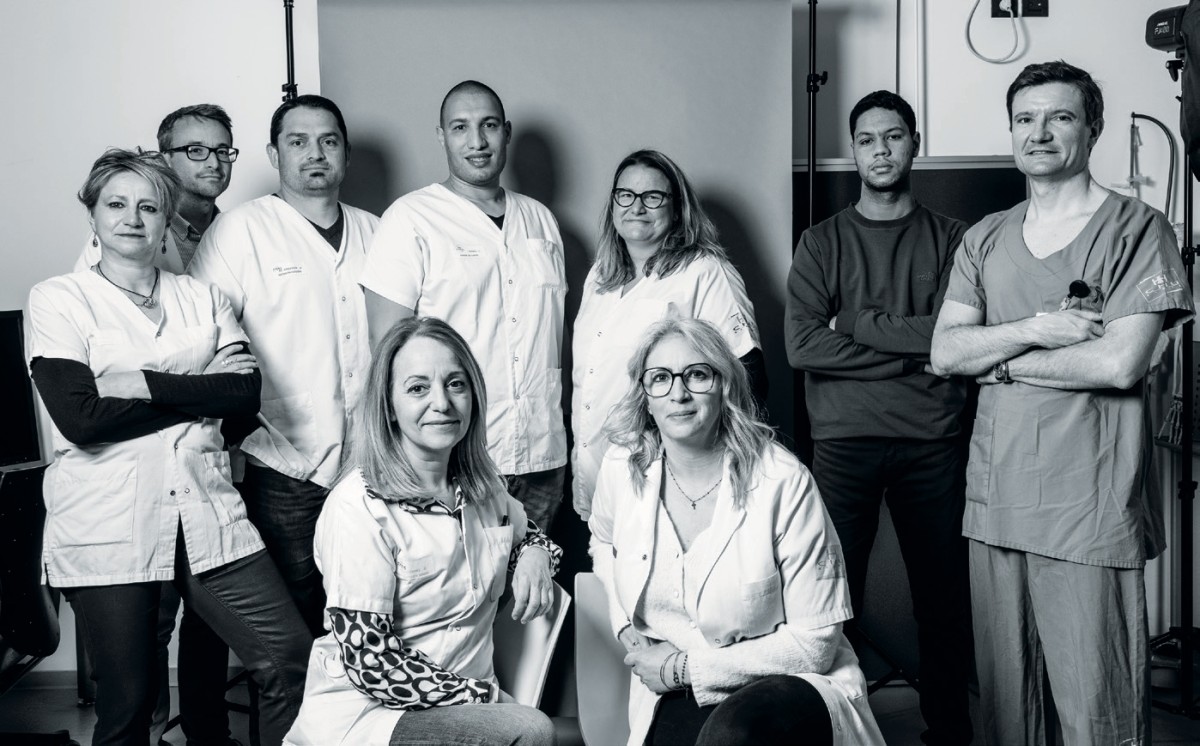
The Imaging Platform for Innovation (IPI) team
Five applications have already been submitted for experimental drugs. “We are currently working on six other projects, four of which concern the manufacture of placebo and verum,” adds Dr Soulairol. A first medical device for the treatment of intra-uterine adhesions was developed in collaboration with the Gynaecology Department and gave rise to the company Womed on the basis of a patent co-owned by the Nîmes University Hospital and the University of Montpellier. “We are currently drawing up an inventory of the needs of the various hospital departments in order to set up R&D programmes for the development of prototypes within the next 5 to 10 years,” stresses Prof. Garric. The DFoRM Platform doubled its production area in 2022 and will move into a brand new building in 2025. “This will enable us to maintain our know-how and equipment to be more resilient in the face of future health crises,” concludes Dr Soulairol.
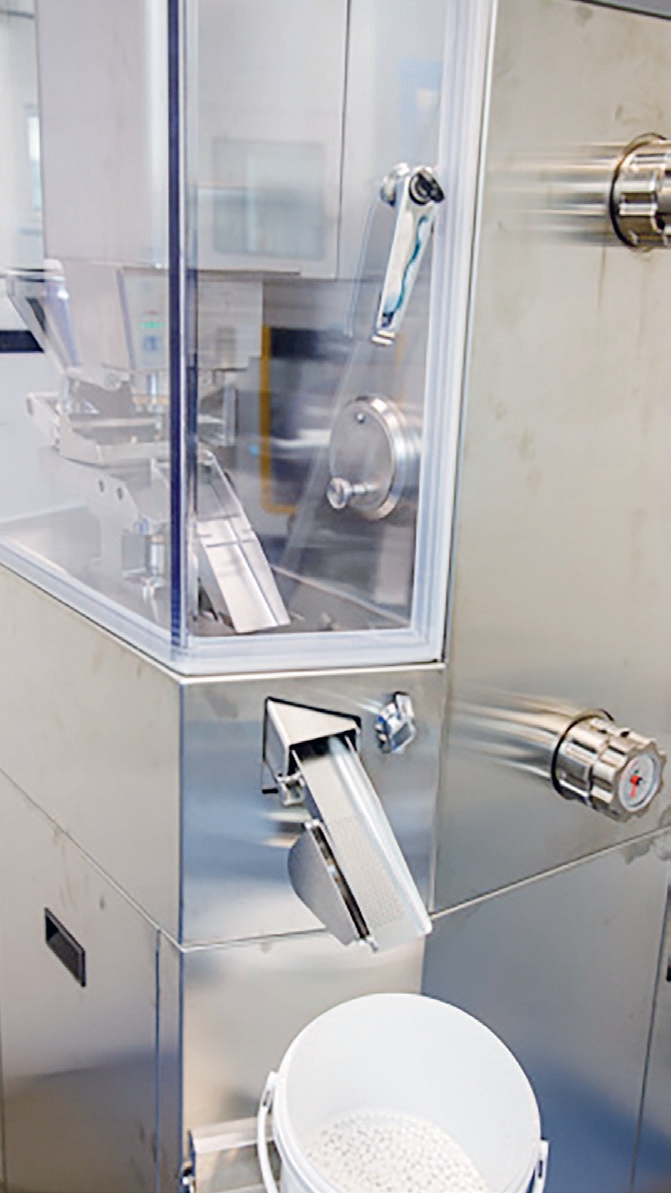
The DEform
Early phase trials in oncology and haematology
Approved in September 2022 by the ARS, the Early Phase Oncology and Haematology Platform (PPPOH) is a continuation of the Gard Cancer Institute (17,000 outpatient chemotherapy sessions and more than 6,500 patients treated in 2022 for haematological diseases or certain solid cancers). “The accreditation allows the PPPOH to go beyond phase 2 and 3 trials with the support of the CHU, the Biological Resource Centre and several research units including the U1194 Inserm – ICM, the Montpellier Cancer Institute, of which I am a member,” explains Prof. Nadine Houédé, deputy head of the Oncology Unit of the Nîmes CHU.
The PPPOH specialises in myelofibrosis, onco-urology, breast cancer and ENT cancers, which are increasingly treated by immunotherapy or targeted therapies (antibodies, CAR-T cells, viral injections into the tumour bed, anti-cancer vaccination or small molecule inhibitors). Its secure and multidisciplinary environment offers recourse to patients in good general condition, without comorbidity. “The first trials have been launched with a dozen patients suffering from ENT cancer or bladder cancer,” stresses Prof. Houédé. She is already planning to increase the therapeutic offer to include a greater number of patients and to launch trials in the field of hemato-oncology and prostate cancer. A fine example of proactivity.
Imaging Platform for Innovation
Offering research services in radiology and medical imaging: this is the objective of the Imaging Platform for Innovation (IPI), which is based on two complementary foundations: a multidisciplinary research team, the “Medical Imaging Group (MIG) Nîmes”, and an imaging platform equipped with the latest generation of multi-machine equipment (scanners, MRI, interventional radiology rooms, including a 4DCT, digital equipment, anthropomorphic phantoms) with dedicated time slots. “IPI is aimed at drug and medical device manufacturers, radiology manufacturers and clinicians with therapeutic projects,” explains Prof. Julien Frandon, head of the Interventional Radiology unit within the Radiology – Medical Imaging division and IPI’s medical manager.
IPI puts its know-how “from code to bedside” at the service of 140 studies structured in 3 areas: digital and AI, biomarkers in imaging and image-guided therapies. IPI has also developed two research areas of its own: ultra-low dose (ULD) imaging, which offers a new 3D radiology with very low exposure to X-rays and controlled ischemia therapy, which studies embolization to stimulate neoangiogenesis. “We plan to move on to photonic scanning to further develop these emerging themes,” says Prof. Frandon. A revolution that would make it possible to develop new biomarkers and reduce radiation doses even further.
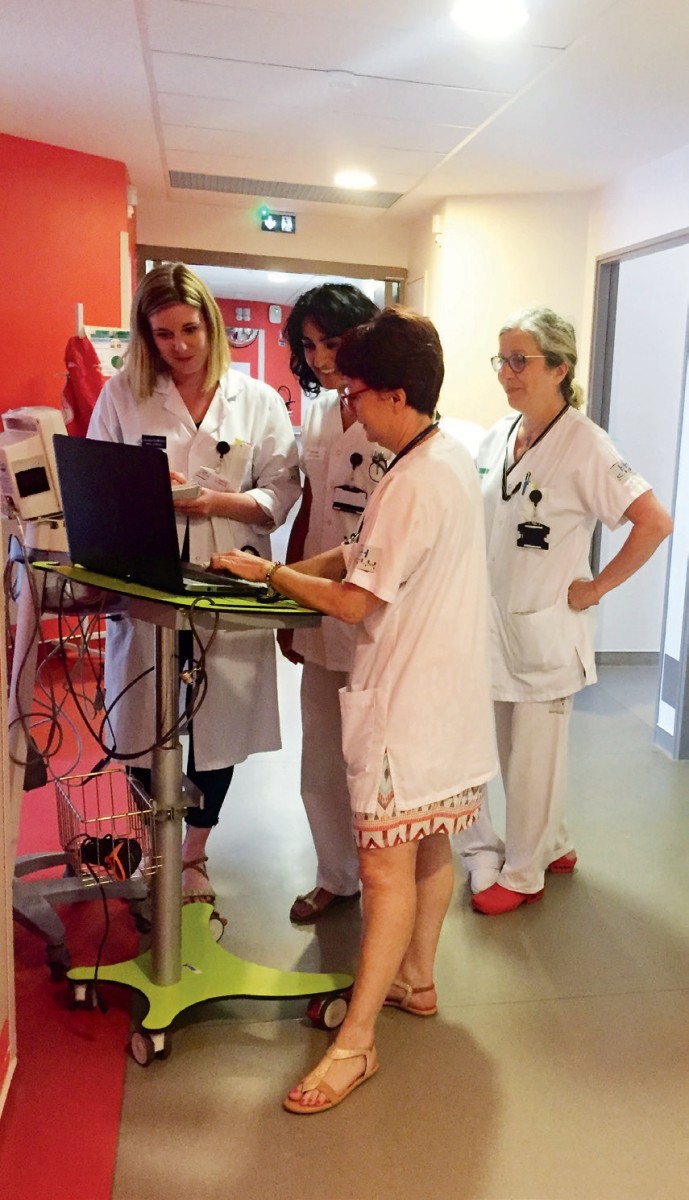
The Early Phase Platform in Oncology and Haematology
Micro&Bio: towards new therapeutic solutions
Hosted by the Microbiology and Hospital Hygiene Department of the Carémeau University Hospital, the platform Micro&Bio is composed of two platforms. The GéMIC platform evaluates the organisation of human microbiota and the genetic and epidemiological evolution of microbial genomes. It recently made it possible to analyse the genome of a new bacterium (Brucella amazonia sp. nov.) and set up a new-generation sequencer, the size of a smartphone, to identify the pathogens that cause meningitis, determining their genome (DNA or RNA) in order to highlight a particular virulence or resistance gene. For Prof. Jean-Philippe Lavigne, head of the Microbiology Department at the Nîmes University Hospital, genomic tools are a solution for the future to facilitate and accelerate diagnosis, better orient treatment and avoid the spread of antibiotic-resistant bacteria. “Sequenced genome analysis kits are currently being developed in collaboration with bioMérieux, based on rapid bioinformatics interpretation software that allows results to be delivered within a day.”
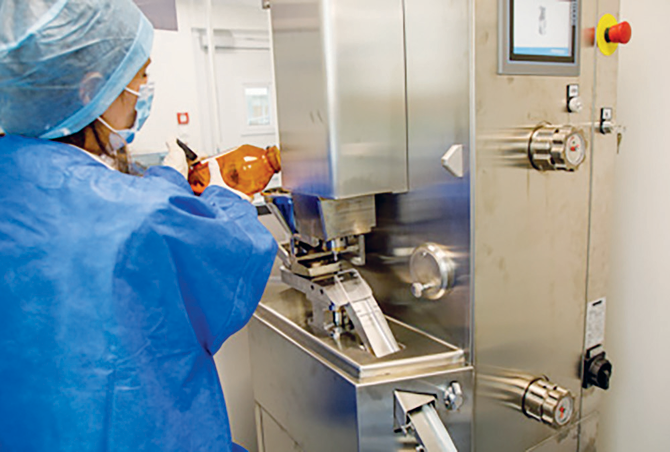
The DFoRM platform
For its part, the bioMONOPOLY platform studies the various stages of formation and regulation of bacteria organised in biofilms that become de facto resistant to all antibiotics. “We use microfluidic technology to mimic the implantation of one or more bacteria on a wound and to evaluate the therapeutic effectiveness of new molecules with antibiotic or antibiofilm potential,” explains Prof. Lavigne. Micro&Bio has joined forces with the company BioFilm Control to also develop the antibiofilmogram, which brings together a bacterium and an antibiotic and observes whether the latter induces the formation of a biofilm, making the antibiotic ineffective. Initial clinical trials have used this tool to explain therapeutic failures during antibiotic treatment, despite the fact that the antibiogram is effective, to make better use of antibiotics and to develop alternatives. An association with the Menarini company has also made it possible to evaluate the activity of new antibiotic treatments on mono and polymicrobial biofilms. These are all advances in the service of precision medicine.

Nîmes University Hospital
Directorate of Research, University Hospital Partnerships
and International Relations
Place du Professeur Robert Debré
F-30029 Nîmes Cedex 9
Tel. : +33 (0)4 66 68 30 52
https://www.chu-nimes.fr/
Originally published in ©Parlementaires de France Magazine, now ©Research Innov France.
